
Deal Soldier Field Intelligence
Home Depot Penny Deals: Signal Or Time Sink?
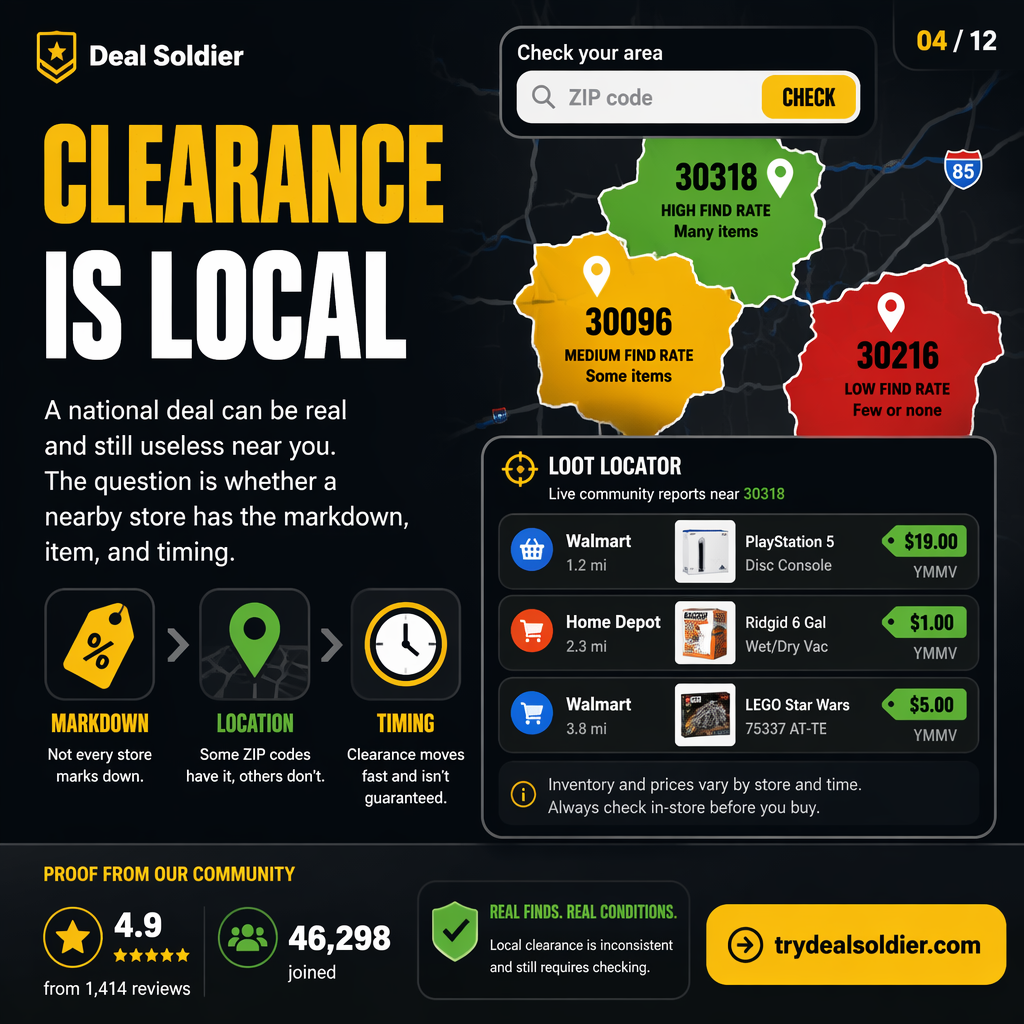
If you are fighting assuming penny equals profitable or worth chasing, use this operational test: a one-cent item can still be a bad decision if it burns an hour and produces unusable inventory
Start the Deal Soldier 7-day trial on Whop
The Field Investigation: What We Are Actually Testing
If you are investigating Deal Soldier, you have likely seen viral social clips: shopping carts loaded with $25 laptops, $3 designer rugs, and penny clearance finds in big-box stores. But viral posts skip the operational friction: store inventory algorithms, shelf tagging lag, phantom stock, and the reality of resale fees.
The core trap we are deconstructing in this guide is assuming penny equals profitable or worth chasing. The operational rule of thumb is straightforward: a one-cent item can still be a bad decision if it burns an hour and produces unusable inventory. If you cannot establish a systematic local workflow that produces verified savings during your 7-day free trial, you should cancel immediately on Whop.
Below is our complete field investigation for Home Depot Penny Deals: Signal Or Time Sink?, broken down scene-by-scene into store mechanics, algorithm breakdowns, and actionable testing protocols.
What Penny Deals Are
The legend of the 'Home Depot Penny Deal' has circulated across internet forums for decades. Unlike normal clearance sales where items drop to 50% or 75% off, penny items ring up at cash registers for literally $0.01.
To understand why this happens, you have to understand retail accounting. Home Depot uses a standardized markdown schedule. When an item is discontinued, it first drops to a price ending in '.06' (approximately 33% off). If it doesn't sell within several weeks, it drops to '.03' (approximately 75% off).
If the item still sits on the shelf roughly three weeks after hitting '.03', the corporate computer system automatically marks the item down to $0.01. This is an internal code known as 'RTV' (Return to Vendor) or 'Salvage'. It signals to store employees that the item has been zeroed out of store inventory and should be removed from the shelf and disposed of.
| Home Depot Price Ending | Markdown Stage | Inventory Status |
|---|---|---|
| Price Ending in .06 | Initial Clearance (33% off) | Active clearance on sales floor |
| Price Ending in .03 | Final Clearance (75% off) | Last chance before system write-off |
| Price Ending in .01 (Penny) | System Salvage / RTV Code | Corporate write-off; scheduled for disposal |
📋 Actionable Verification Protocol
- Inspect yellow clearance tags for prices ending in .06 and .03.
- Calculate the date code printed on the yellow clearance sticker.
- Check shelves roughly 21 days after an item hits .03: this is when the penny drop triggers.
Target Decision: Look for the .03 yellow tag progression to anticipate when items will drop to a penny.
Action Threshold: Recognize that a .01 item is an inventory salvage code, not an advertised sale.
Immediate Failure Mode: Expecting store employees to help you locate penny items: their job is to remove them.
For additional context on What Penny Deals Are, compare this operational step with our detailed breakdown in Deal Alerts vs Deal Judgment and cross-reference our field rules in Walmart vs Target vs Home Depot vs Lowes: Best Stores For Hidden Clearance.
Why They Spread Fast
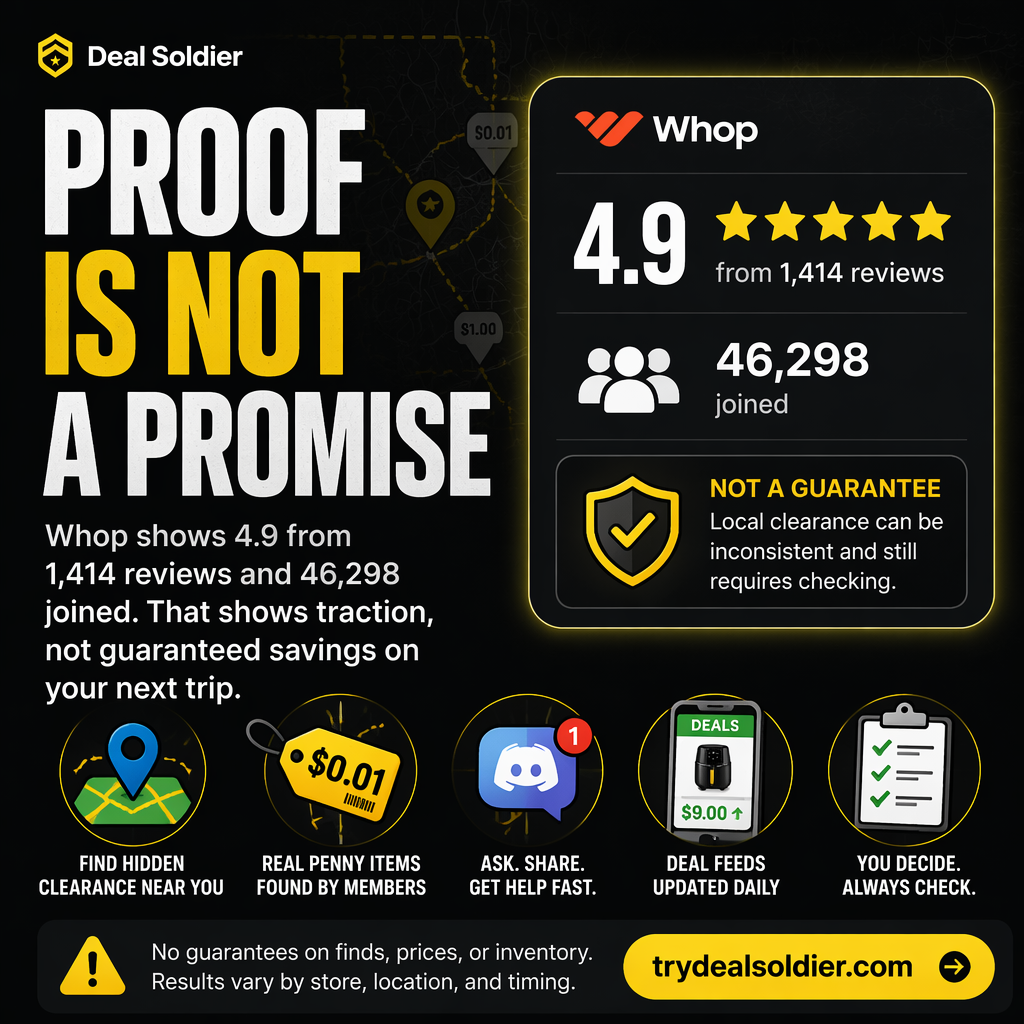
Few things ignite human greed quite like the concept of paying one penny for a $150 cordless drill or a $90 ceiling fan. When a shopper finds a penny deal and posts the receipt online, the post spreads across social media like wildfire.
This viral velocity creates an intense competitive environment. Home Depot employees are tasked with pulling penny items off shelves early in the morning. Simultaneously, hundreds of local deal hunters and professional contractors check inventory trackers.
As a result, penny deals have an extremely short shelf life. The window between an item dropping to $0.01 in the computer system and being physically removed by employees or swept by hunters is often less than 24 to 48 hours.
| Channel | Broadcast Speed | Shelf Impact |
|---|---|---|
| Deal Soldier SniperX Alert | Real-time automated detection | Allows early morning access before shelf sweeps |
| Private Community Post | 30 to 60 minutes after discovery | Moderate competition within regional radius |
| Public Facebook / Reddit Post | 4 to 12 hours after discovery | Complete shelf wipeout; massive wasted trips |
📋 Actionable Verification Protocol
- Rely on real-time alerts rather than lagging social media feeds.
- Target stores early in the morning when the doors open at 6:00 AM.
- Keep your focus on high-ticket hardware and plumbing aisles.
Target Decision: Act immediately when early-stage penny signals appear, or ignore them entirely.
Action Threshold: Only pursue penny alerts that are fresh (less than 2 hours old).
Immediate Failure Mode: Chasing viral 24-hour-old penny posts and arriving at empty shelves.
For additional context on Why They Spread Fast, compare this operational step with our detailed breakdown in The Real Math Of Clearance Deals and cross-reference our field rules in Deal Soldier 7-Day Trial Checklist.
Why Many Are Dead On Arrival
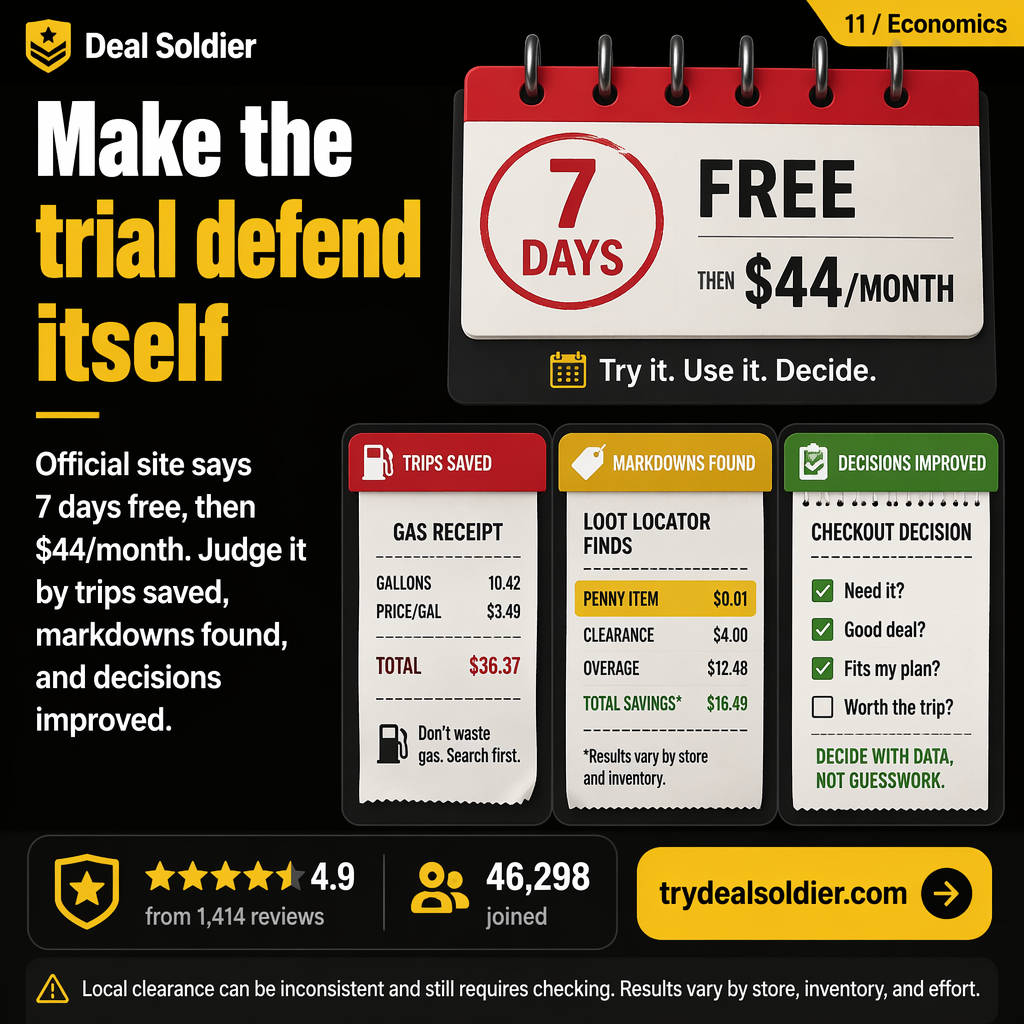
The reason the vast majority of penny hunters fail is simple: Home Depot's internal procedures are specifically designed to prevent you from buying them. Every morning before the store opens, department heads print a report listing every SKU that dropped to $0.01 overnight.
Associates are supposed to walk their aisles with an orange rolling cart, pull every item on that list off the shelf, scan them into the system as 'salvage', and stage them in the receiving department for destruction or return to the vendor.
Therefore, the only way you find a penny deal on the sales floor is if an associate made an error: they missed the item, it was tucked behind other merchandise, it was displaced in the wrong aisle, or the department was too short-staffed to run the morning sweep.
| Internal Process | Timing | Hunter Implication |
|---|---|---|
| ZMA Report Generation | Overnight (approx. 4:00 AM - 5:30 AM) | Computer system marks items down to $0.01 |
| Associate Floor Sweep | Morning shift (6:00 AM - 9:00 AM) | Employees physically pull penny items from shelves |
| Receiving Destruction / RTV | Afternoon (12:00 PM - 3:00 PM) | Items compacted or packed on pallets for return |
📋 Actionable Verification Protocol
- Look in secondary locations where morning floor sweeps fail: top risers, bottom kickplates, and clearance endcaps.
- Check garden center outdoor racks where seasonal hardware is frequently abandoned.
- Never ask an employee: 'Do you have any penny items?' They will immediately confiscate them.
Target Decision: Understand that penny hunting is hunting for employee oversights, not regular retail stock.
Action Threshold: Only expect to find penny items in neglected departments or hidden storage zones.
Immediate Failure Mode: Relying on main shelf peg hooks where items are consistently removed on schedule.
For additional context on Why Many Are Dead On Arrival, compare this operational step with our detailed breakdown in Walmart vs Target vs Home Depot vs Lowes: Best Stores For Hidden Clearance and cross-reference our field rules in Deal Alerts vs Deal Judgment.
When Penny Hunting Makes Sense
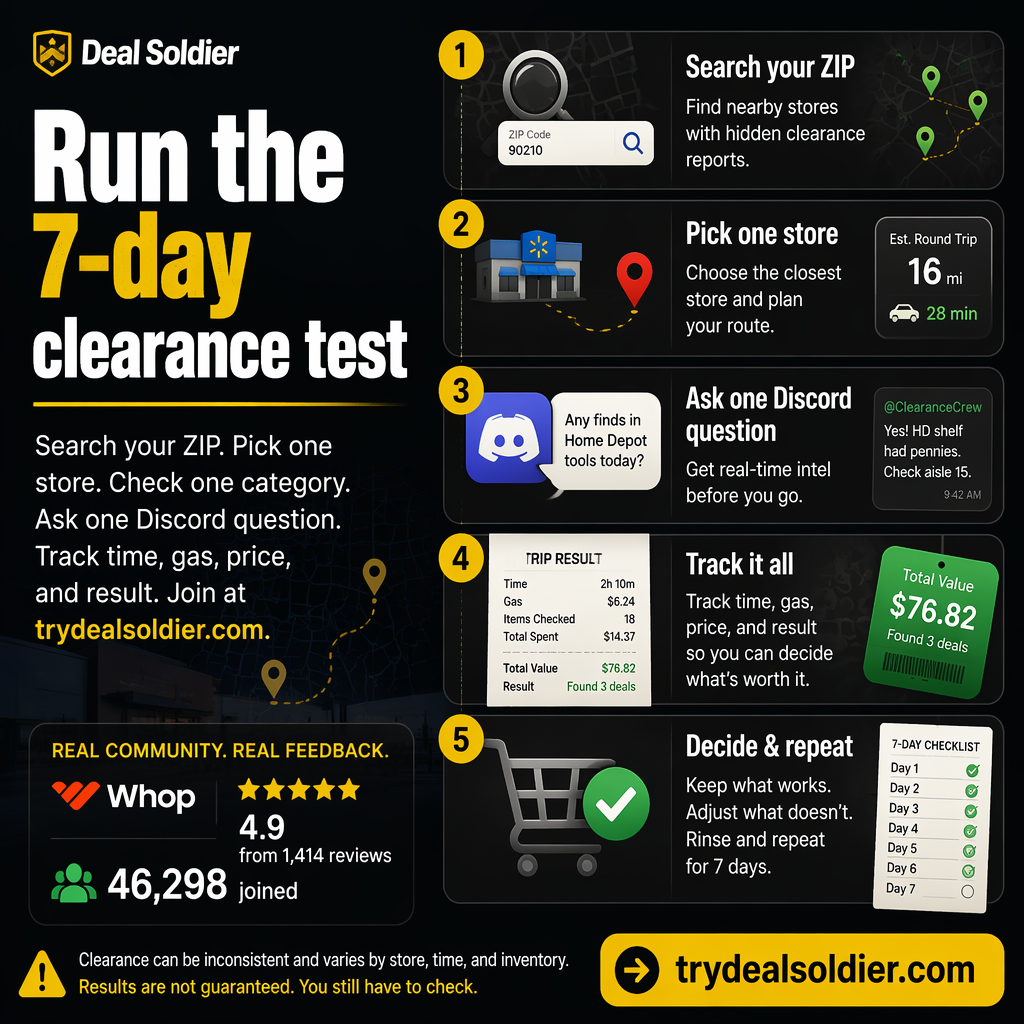
If you get in your car, drive 15 miles, spend $6 in gasoline, and spend an hour hunting specifically for penny deals, you are almost guaranteed to lose money. The hit rate on penny items is simply too low to justify dedicated, single-purpose travel.
However, penny hunting is extraordinarily profitable for individuals who are already in Home Depot on a routine basis: contractors, handymen, property managers, DIY remodelers, and frequent shoppers.
When you integrate penny scanning into your regular routine, your marginal cost is zero. You are already in the aisle buying drywall screws or paint; spending 45 seconds scanning three yellow-tagged items on a nearby endcap costs you nothing. When you hit a penny valve or light fixture, it is 100% pure profit.
| Shopper Profile | Trip Type | Financial Viability |
|---|---|---|
| Dedicated Penny Chaser | Drives specifically to hunt pennies | Extremely Low / Negative ROI (Fuel & time sink) |
| Routine Contractor / DIYer | Checks clearance while buying project supplies | High ROI (Zero marginal travel cost) |
| General Hardware Reseller | Sources tools and fixtures during weekly errand loop | Moderate to High ROI (Diversified product sourcing) |
📋 Actionable Verification Protocol
- Never make a dedicated store trip solely for the speculative chance of a penny item.
- Add a 5-minute clearance sweep to your regular hardware shopping trips.
- Focus on durable commercial goods: brass fittings, electrical switches, high-grade fasteners.
Target Decision: Treat penny hunting as an opportunistic bonus during routine trips, never as a primary pursuit.
Action Threshold: Combine clearance checks with necessary household or professional shopping.
Immediate Failure Mode: Burning half a tank of gas driving to five different Home Depots and finding zero pennies.
For additional context on When Penny Hunting Makes Sense, compare this operational step with our detailed breakdown in Deal Soldier 7-Day Trial Checklist and cross-reference our field rules in The Real Math Of Clearance Deals.
When To Ignore It
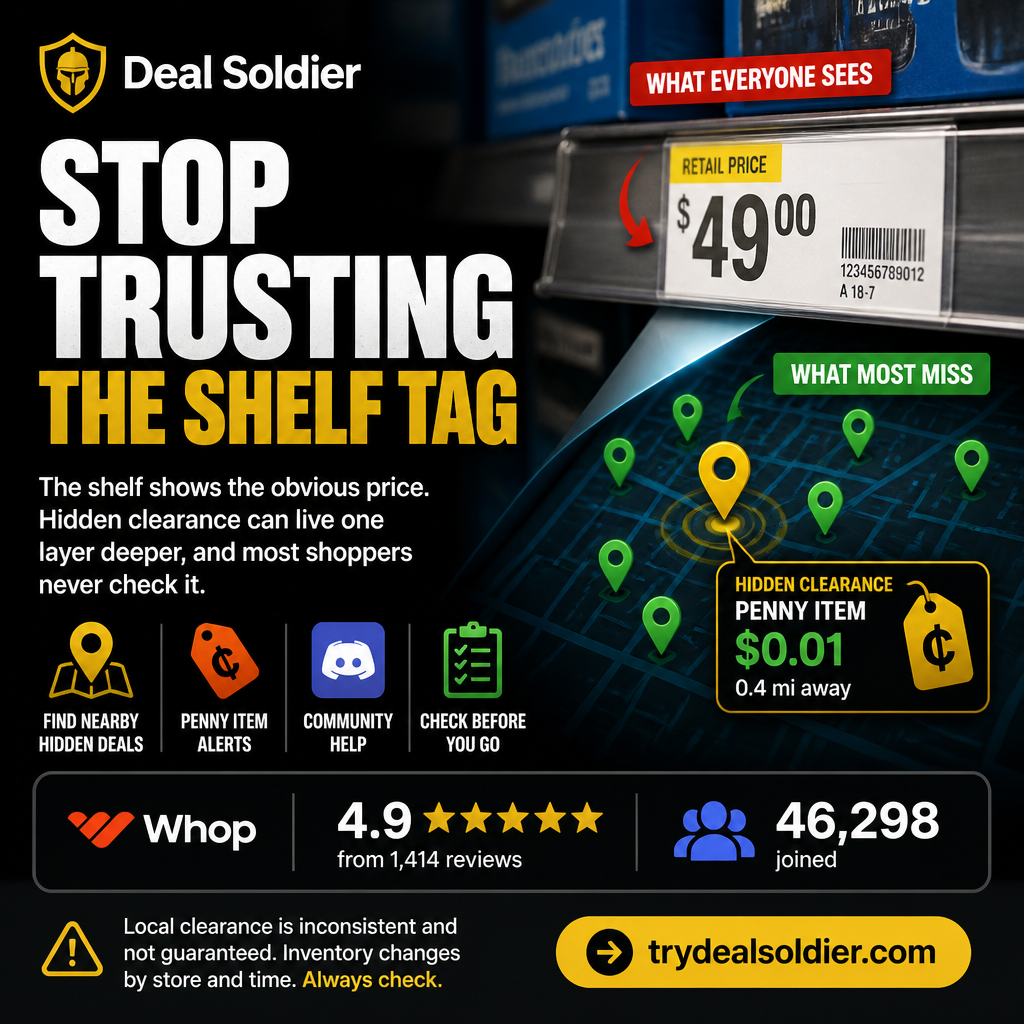
Knowing when to walk away from a deal is the mark of a seasoned operator. The emotional thrill of a 'one-cent' price tag frequently blinds beginners to basic transportation arithmetic.
If an alert fires for an item located at a store 20 miles away, you must account for real costs: 40 miles round-trip at the IRS standard mileage rate of $0.67/mile represents $26.80 in vehicle depreciation and fuel. If the item you are chasing is a $20 ceiling fan, finding it at a penny actually loses you $6.79!
Furthermore, if the alert is more than 3 hours old, or if the store is located in a high-density urban area with dozens of aggressive resellers, the probability of the item remaining on the shelf drops below 5%. Ignore it and stay home.
| Deal Variable | Red Flag (IGNORE) | Green Flag (PURSUE) |
|---|---|---|
| Distance | More than 10 miles away in heavy traffic | Less than 5 miles or along your daily commute |
| Alert Age | Alert posted > 3 hours ago | Alert posted < 30 minutes ago |
| Store Location | High-traffic urban center with heavy reseller density | Quiet suburban or semi-rural store location |
| Item Utility | Bulky, low-value novelty or single-use item | High-value commercial hardware or staple tools |
📋 Actionable Verification Protocol
- Calculate the true vehicle cost: round-trip miles multiplied by $0.40 fuel/wear baseline.
- Check Google Maps traffic before considering any travel.
- If the trip costs more than $10 in vehicle expense, ignore the penny alert.
Target Decision: Enforce strict travel boundary rules to eliminate low-probability penny chases.
Action Threshold: Distance > 10 miles OR Alert Age > 2 hours = Immediate Skip.
Immediate Failure Mode: Letting the psychological excitement of a 'penny' override basic mathematics.
For additional context on When To Ignore It, compare this operational step with our detailed breakdown in Deal Alerts vs Deal Judgment and cross-reference our field rules in Walmart vs Target vs Home Depot vs Lowes: Best Stores For Hidden Clearance.
SniperX/Penny Signal Test

Manual penny hunting is like finding a needle in a 100,000-square-foot haystack. Walking through Home Depot scanning random barcodes with an app will yield sore feet and frustration.
SniperX transforms this process into data reconnaissance. By tracking inventory and pricing deltas, the tool identifies which items in your district have reached the '.03' stage and are approaching the 21-day expiration threshold.
When an item officially drops to $0.01 in the system, SniperX flags the SKU and store coordinates. If you choose to act, you walk in with precision: knowing the exact SKU number, the product description, and the department aisle.
| Detection Stage | Manual Hunter | SniperX User |
|---|---|---|
| Tracking .03 Items | Must memorize yellow tag dates manually | Automated system tracking markdown age |
| Penny Drop Timing | Discovered purely by luck days later | Detected within minutes of database update |
| Store Routing | Random wandering between aisles | Direct navigation to confirmed markdown coordinates |
📋 Actionable Verification Protocol
- Review the SniperX channel inside the Deal Soldier Discord each morning.
- Identify items marked with recent '.01' status transitions.
- Cross-reference whether any flagged stores fall within your normal errand route.
Target Decision: Use SniperX to replace blind store wandering with algorithmic targeting.
Action Threshold: Only pursue SniperX signals for stores you can reach within 60 minutes of opening.
Immediate Failure Mode: Expecting SniperX to magically make items appear if store associates have already trashed them.
For additional context on SniperX/Penny Signal Test, compare this operational step with our detailed breakdown in The Real Math Of Clearance Deals and cross-reference our field rules in Deal Soldier 7-Day Trial Checklist.
Gas And Time Math
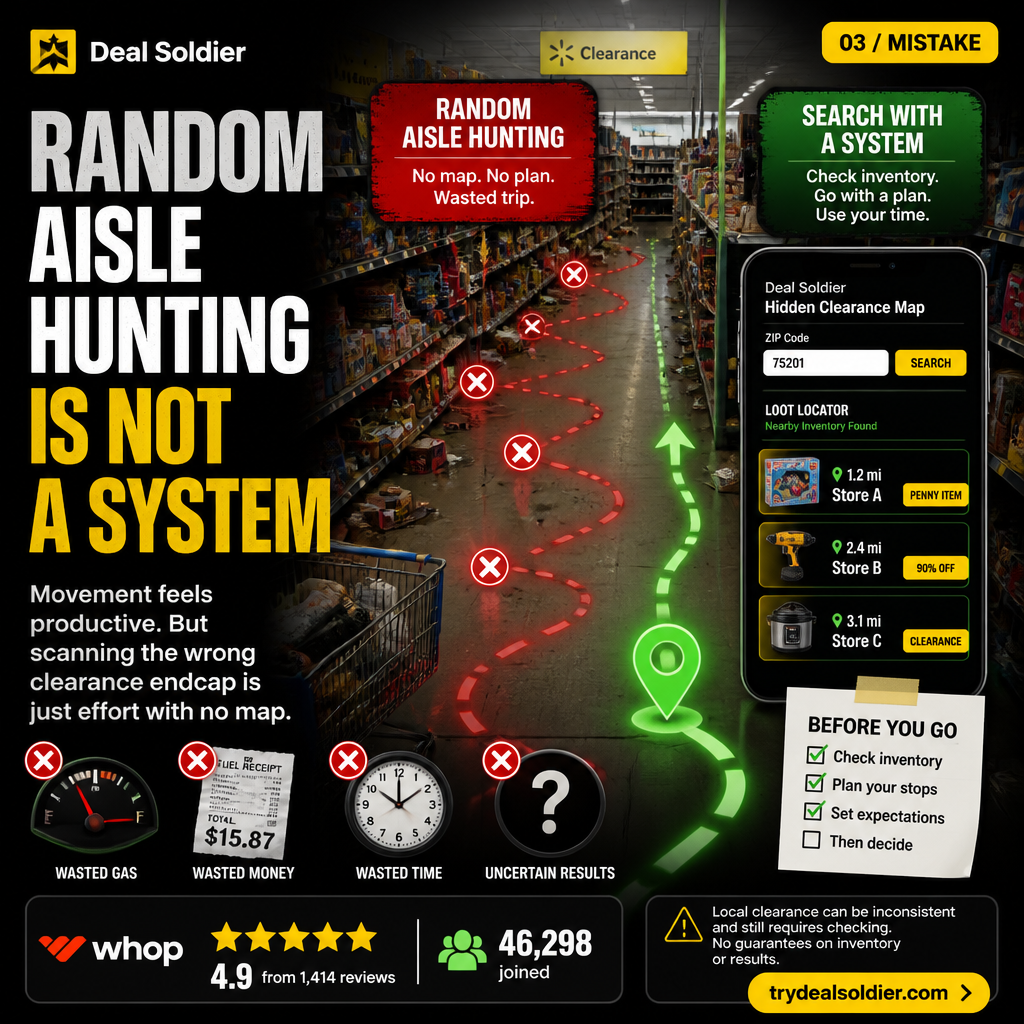
To become a disciplined, profitable deal hunter, you must treat your vehicle like a business expense. Modern vehicles cost between $0.35 and $0.65 per mile to operate when factoring in fuel, tire wear, oil changes, and depreciation.
If you drive 24 miles round trip to score five light switches for $0.05 total, you spent approximately $12.00 in vehicle expenses. If those light switches would have cost you $15 at full price, your real net savings is only $2.95—for an hour of your time.
Professional hunters maintain a strict minimum margin threshold: a trip must yield at least $35 in verifiable net savings or resale profit after deducting travel expenses to be considered a winning transaction.
| Trip Metric | Short Local Run (4 miles) | Long Commute Run (20 miles) |
|---|---|---|
| Fuel & Vehicle Cost ($0.40/mi) | $1.60 | $8.00 |
| Time Required | 20 minutes | 75 minutes |
| Minimum Savings Needed | $15.00 | $45.00 |
| Net Margin on $50 Item | $48.39 (Exceptional ROI) | $41.99 (Moderate ROI) |
📋 Actionable Verification Protocol
- Track your trip mileage: record odometer readings on deal runs.
- Assign an hourly value to your personal time (e.g., $20/hour).
- Subtract total trip expenses from the retail value of every clearance haul.
Target Decision: Incorporate vehicle expenses into your clearance evaluation math.
Action Threshold: Do not execute single-purpose store runs unless potential net savings exceed $35.
Immediate Failure Mode: Ignoring travel costs and deluding yourself into thinking every penny find is free money.
For additional context on Gas And Time Math, compare this operational step with our detailed breakdown in Walmart vs Target vs Home Depot vs Lowes: Best Stores For Hidden Clearance and cross-reference our field rules in Deal Alerts vs Deal Judgment.
7-Day Trial Test
During your Deal Soldier 7-day trial, testing Home Depot should focus on understanding the clearance pipeline rather than obsessing over finding a one-cent item on day one.
Visit your nearest Home Depot during your routine weekly errands. Walk the back endcaps of Plumbing, Electrical, and Hardware. Locate three items with yellow clearance stickers. Examine the price endings: do you see prices ending in '.06' and '.03'?
Look at the small printed date code in the corner of the yellow sticker. If you see items that have been at '.03' for two to three weeks, you have identified prime candidates approaching the penny threshold. This confirms that your local store's pipeline is healthy and active.
| Trial Audit Step | What To Check | Benchmark |
|---|---|---|
| 1. Clearance Endcaps | Presence of yellow clearance stickers | At least 3 dedicated clearance endcaps in store |
| 2. Price Endings | Identify .06 (Stage 1) and .03 (Stage 2) tags | Multiple active .03 tags observed |
| 3. Date Code Audit | Check age of yellow tag stickers | Tags older than 14 days indicate imminent drops |
📋 Actionable Verification Protocol
- Locate the date code printed in small text on the bottom right of the yellow tag.
- Record the SKU number and date code of any .03 item in your phone notes.
- Check that SKU in Deal Soldier to track its status over the remainder of your trial.
Target Decision: Use your 7-day trial to audit the health of your local Home Depot's clearance pipeline.
Action Threshold: Locating at least two .03 yellow tags verifies that the markdown cycle is active.
Immediate Failure Mode: Judging the platform as broken because a specific random store had no penny items on a Tuesday.
For additional context on 7-Day Trial Test, compare this operational step with our detailed breakdown in Deal Soldier 7-Day Trial Checklist and cross-reference our field rules in The Real Math Of Clearance Deals.
FAQ
The single most common fear among beginners is cashier confrontation. What actually happens when a penny item is scanned at Home Depot?
If you scan the item at a Self-Checkout terminal, the barcode reads $0.01. You insert a coin or tap your card, the register prints a valid receipt, and you walk out the door. The transaction is 100% legal, recorded, and authorized by the store's central server.
However, if you take a penny item to a staffed register lane, the cashier's screen may prompt an alert indicating that the item has been recalled or zeroed out. Home Depot's official employee policy instructs the cashier to apologize, explain that the item cannot be sold, void the item, and place it in the RTV bin. You simply smile, say 'no problem', and complete the rest of your purchase. You never argue or make a scene.
| Checkout Scenario | System Behavior | Recommended Hunter Action |
|---|---|---|
| Self-Checkout Terminal | Rings up $0.01 automatically; completes normally | Pay quickly, take receipt, walk out calmly |
| Staffed Register Lane | Cashier sees $0.01; register may prompt manager override | If cashier voids item, accept politely and walk away |
| Asset Protection / Door Check | Shows valid printed receipt showing $0.01 charge | Show receipt with confidence; purchase is 100% legal |
📋 Actionable Verification Protocol
- Always use self-checkout stations whenever possible at Home Depot.
- Never argue with an associate if an item is pulled: maintaining a good relationship with store staff is paramount.
- Keep your printed paper receipt in hand as you exit through the main entrance.
Target Decision: Navigate Home Depot checkout with calm professionalism and zero fear.
Action Threshold: Accept that occasional cashier voids are part of the penny-hunting game.
Immediate Failure Mode: Engaging in an aggressive argument over a one-cent item and drawing unwanted security attention.
For additional context on FAQ, compare this operational step with our detailed breakdown in Deal Alerts vs Deal Judgment and cross-reference our field rules in Walmart vs Target vs Home Depot vs Lowes: Best Stores For Hidden Clearance.