Deal Soldier Field Intelligence
Walmart Hidden Clearance Guide
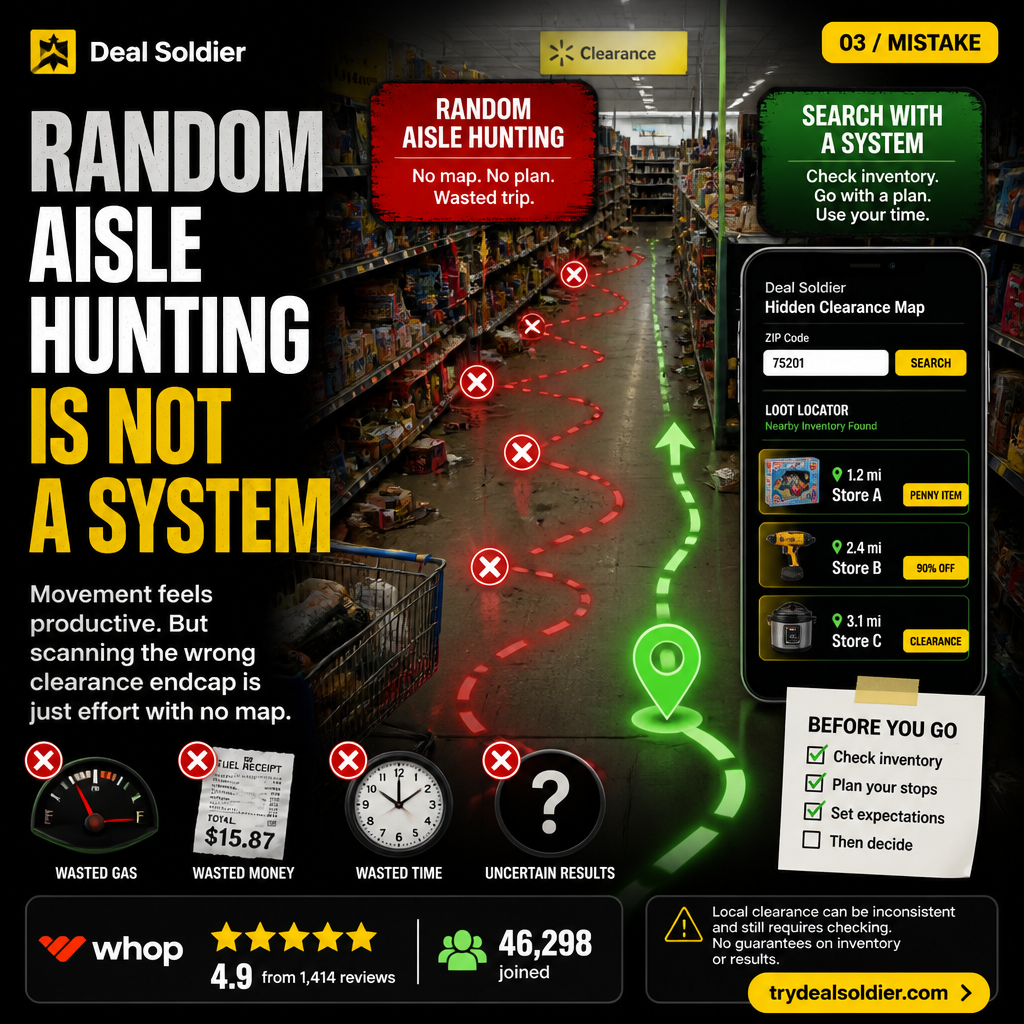
If you are fighting walking every aisle because a screenshot made the deal feel universal, use this operational test: one unnecessary Walmart run can cost gas, time, and attention before you even see a shelf
Start the Deal Soldier 7-day trial on Whop
The Field Investigation: What We Are Actually Testing
If you are investigating Deal Soldier, you have likely seen viral social clips: shopping carts loaded with $25 laptops, $3 designer rugs, and penny clearance finds in big-box stores. But viral posts skip the operational friction: store inventory algorithms, shelf tagging lag, phantom stock, and the reality of resale fees.
The core trap we are deconstructing in this guide is walking every aisle because a screenshot made the deal feel universal. The operational rule of thumb is straightforward: one unnecessary Walmart run can cost gas, time, and attention before you even see a shelf. If you cannot establish a systematic local workflow that produces verified savings during your 7-day free trial, you should cancel immediately on Whop.
Below is our complete field investigation for Walmart Hidden Clearance Guide, broken down scene-by-scene into store mechanics, algorithm breakdowns, and actionable testing protocols.
Why Walmart Feels Random
Walking into a Walmart Supercenter looking for clearance can feel disorienting. You might find high-end laptops for $25 in one aisle, while simple household goods remain at full price. To the untrained eye, it looks like arbitrary management whim.
In reality, Walmart's pricing operates on centralized algorithmic schedules. The Home Office in Bentonville pushes major markdown batches on specific weekdays—typically the first five business days of the month and seasonal turnover dates (e.g., post-Christmas, post-Easter, late August for summer, and mid-January for winter goods).
When markdown batches drop, they hit the store's central terminal. Store managers then have a designated markdown budget and a timeline to liquidate those units. The 'randomness' you observe is simply the lag between the digital system updating and employees physically tagging the merchandise.
| Walmart Markdown Cycle | Corporate Timing | What Drops |
|---|---|---|
| First Week of Month | Monday - Wednesday early AM | Major departmental category markdowns (Toys, Tech, Home) |
| Mid-Month Sweep | 15th - 18th of the month | Secondary price drops (50% items dropped to 75%) |
| Seasonal Phase-Out | Immediate post-holiday (Day 1, Day 7, Day 14) | Seasonal progression: 50% -> 75% -> 90% off |
| Manager Discretion | Continuous weekly updates | Damaged box, returned online goods, open-box electronics |
📋 Actionable Verification Protocol
- Visit Walmart on Tuesday or Wednesday mornings between 7:30 AM and 10:00 AM for fresh markdowns.
- Track seasonal calendar resets: plan visits immediately following major holidays.
- Check the electronics counter locked cages: managers quietly reprice older display units.
Target Decision: Align your store visits with Walmart's corporate repricing cadence rather than shopping at random times.
Action Threshold: Target visits during the first week of the month or within 10 days of a major holiday.
Immediate Failure Mode: Visiting on busy Saturday afternoons when clearance inventory has been picked over.
For additional context on Why Walmart Feels Random, compare this operational step with our detailed breakdown in What Is Hidden Clearance? and cross-reference our field rules in Should You Flip That Clearance Find?.
The Screenshot Trap
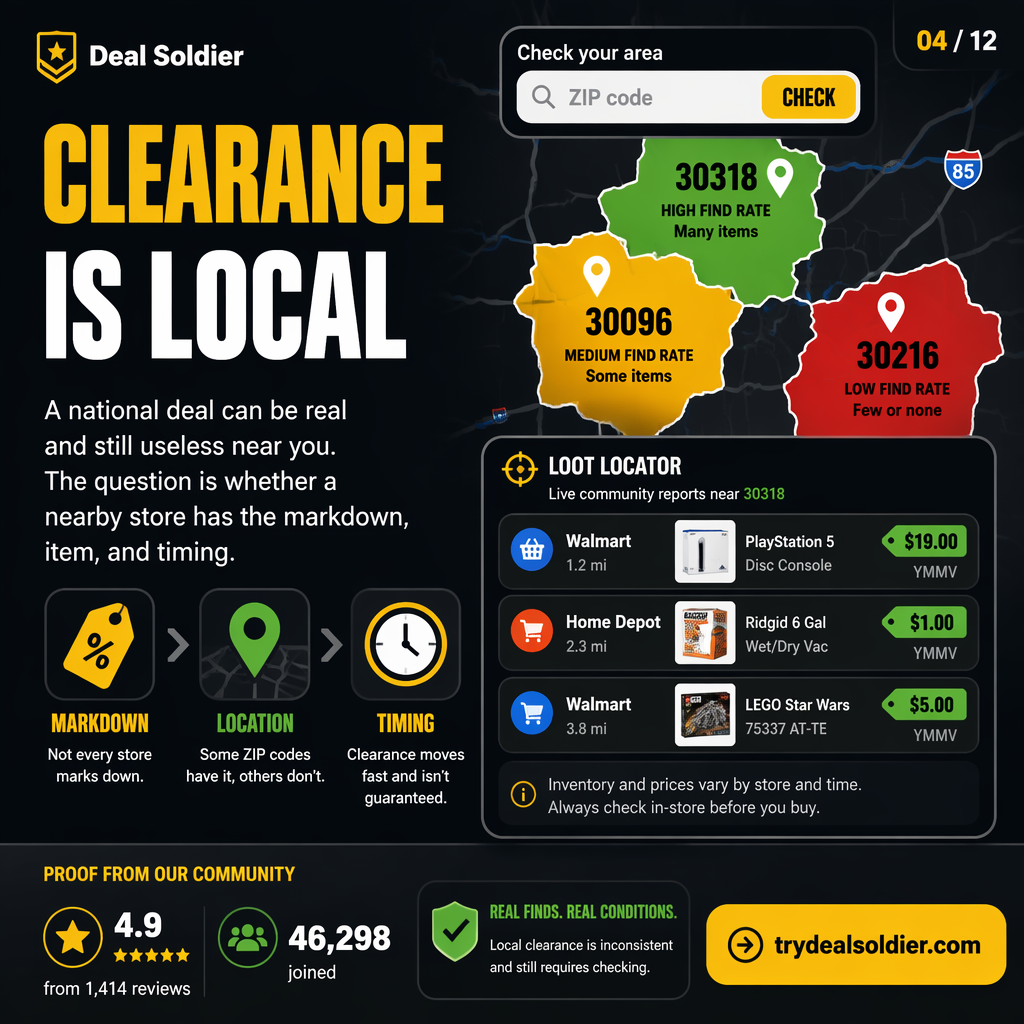
The 'Screenshot Trap' is the number one cause of burnout for new deal hunters. You see a creator hold up a receipt showing three $25 HP laptops or $3 area rugs. Inspired, you hop in your car, drive 20 minutes to your local Walmart, rush to the aisle, and find the item either completely out of stock or priced at full retail MSRP.
What the viral post didn't tell you: that specific Walmart had one remaining floor model that the manager manually slashed to clear inventory. Or that the video was recorded four days prior, and local hunters cleaned out the remaining stock within two hours of the store opening.
Deal Soldier insulates you from the screenshot trap by replacing unverified social media hype with local data: querying real-time inventory counts for your specific ZIP code before you turn the ignition key in your car.
| Information Source | Geographic Relevance | Timing Accuracy | Reliability |
|---|---|---|---|
| TikTok / Reels Video | Low (Random nationwide store) | Extremely Low (often filmed days/weeks ago) | 15% - High risk of wasted trip |
| Public Facebook / Reddit | Low to Moderate | Low (broadcast to thousands simultaneously) | 30% - Rapidly cleared out |
| Deal Soldier Turbo Search | 100% Local (Your ZIP code radius) | Real-time automated inventory delta | 85%+ - Verified local data |
📋 Actionable Verification Protocol
- Never drive to a store based solely on a social media video or static screenshot.
- Extract the 12-digit UPC barcode or Walmart SKU from the screenshot.
- Input that SKU directly into Turbo Search to verify local store pricing and physical unit counts.
Target Decision: Filter every viral deal claim through your local inventory scanner before traveling.
Action Threshold: Only pursue deals verified within your local store radius.
Immediate Failure Mode: Wasting hours of driving time and gallons of gas chasing viral internet ghosts.
For additional context on The Screenshot Trap, compare this operational step with our detailed breakdown in The Real Math Of Clearance Deals and cross-reference our field rules in Deal Soldier 7-Day Trial Checklist.
What To Check Before Driving
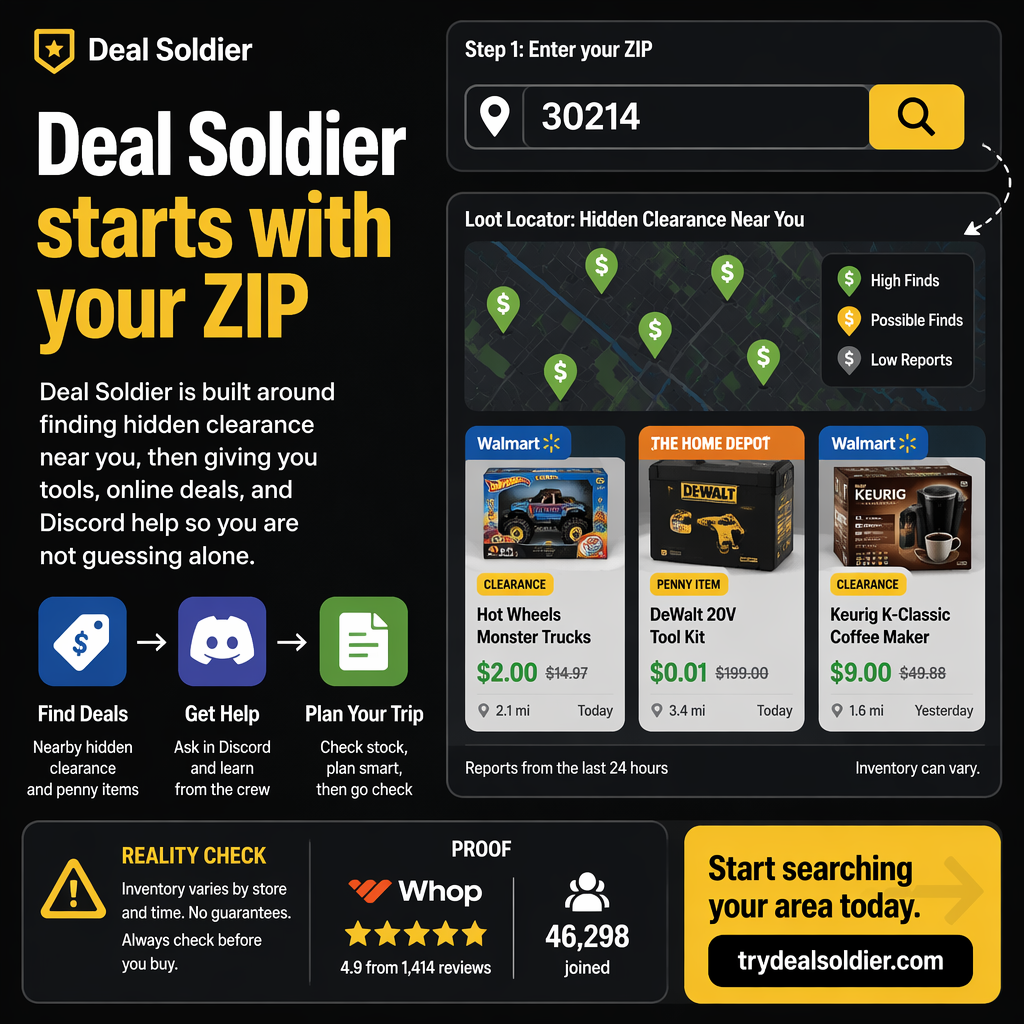
Before driving to Walmart, professional deal hunters perform a quick three-point verification check. First, they confirm that the markdown has registered specifically at the target store location. A deal active at Store #1204 might not yet be live at Store #3411.
Second, they evaluate inventory depth. Chasing a single remaining unit is high risk—there is a high probability of phantom inventory, theft, or an employee having it stashed in a break room. If the system shows 3, 4, or 5+ units, the likelihood of walking out with inventory increases dramatically.
Third, they calculate travel ROI: is the potential savings spread large enough to justify the round-trip mileage and time? If a deal saves $8 but requires a 14-mile round trip, fuel and time completely wipe out the benefit.
| Pre-Drive Checkpoint | Minimum Requirement | Action if Failed |
|---|---|---|
| Store Specificity | Target store must show active price drop | Do not drive; check alternative nearby stores |
| Inventory Count | Minimum 2 units (preferably 3+) | Skip dedicated trip; combine with regular errands |
| Net Savings Spread | Minimum $25 savings spread | Pass on deal; wait for higher-margin opportunities |
📋 Actionable Verification Protocol
- Check local Walmart store hours: some departments lock display cases after 8:00 PM.
- Verify target store number in your search app to ensure you navigate to the correct building.
- Check weather conditions: outdoor garden clearance may be inaccessible during severe storms.
Target Decision: Enforce a mandatory pre-drive verification check on every single store run.
Action Threshold: All 3 checkpoints (Store match, 2+ units, $25+ spread) must pass before driving.
Immediate Failure Mode: Impulse driving on incomplete information and returning empty-handed.
For additional context on What To Check Before Driving, compare this operational step with our detailed breakdown in Should You Flip That Clearance Find? and cross-reference our field rules in Walmart vs Target vs Home Depot vs Lowes: Best Stores For Hidden Clearance.
What To Scan In Store
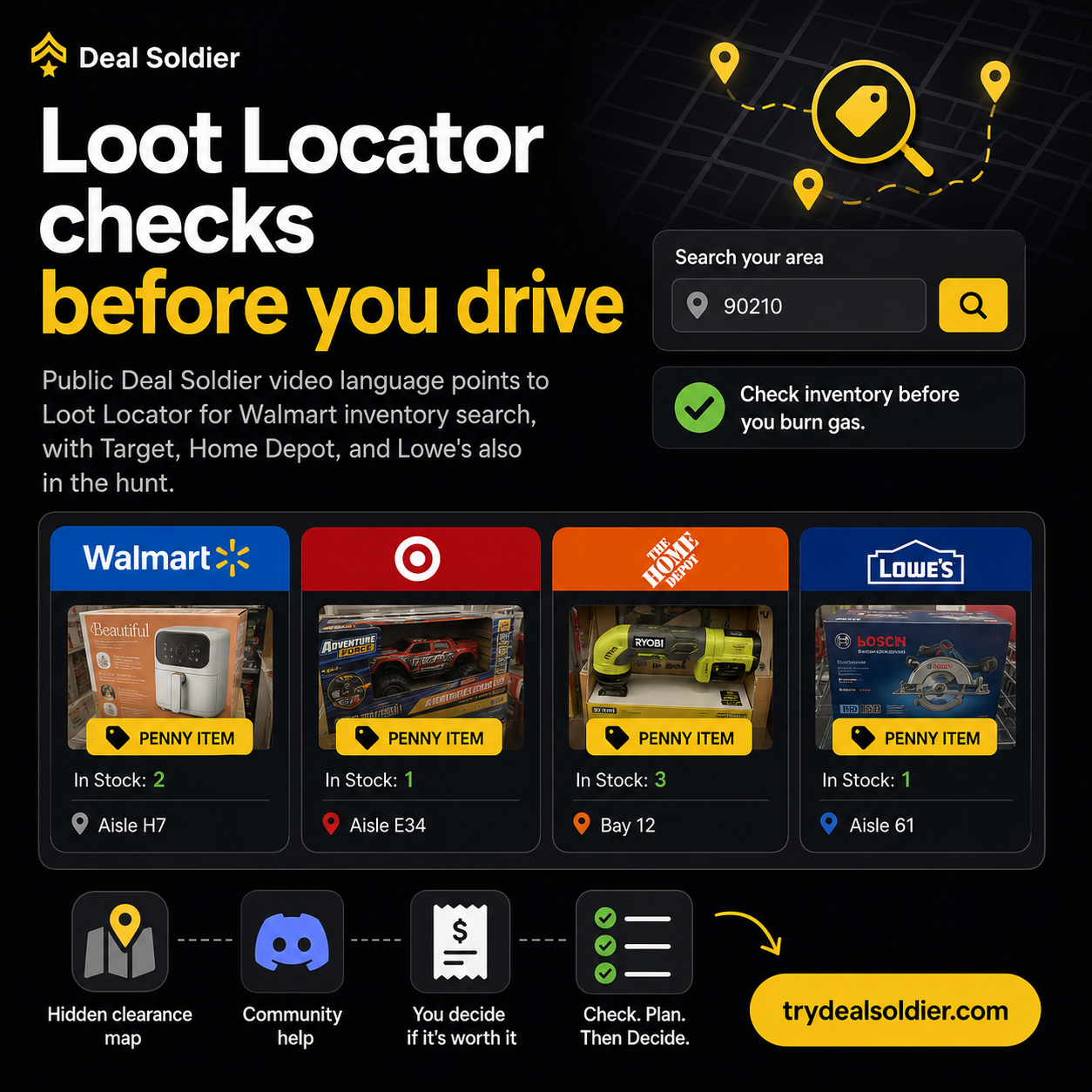
When you arrive at Walmart, where should you actually point your scanner? The biggest mistake beginners make is heading straight to the designated 'Clearance Aisle'. By the time merchandise is moved to the clearance aisle, hundreds of other shoppers have already picked through it, leaving behind opened boxes, missing accessories, and unsellable scraps.
The highest-margin clearance remains in the original department aisles. Focus your scanning on four specific zones: First, 'Top Risers'—the high storage shelves directly above standard merchandise where overflow inventory is kept in unmarked brown boxes.
Second, 'Bottom Kickplates'—the lowest shelf closest to the floor where discontinued items are frequently pushed to make room for new planograms. Third, 'Endcaps Facing Back Walls'—secondary endcaps that do not face main action alleys often hold quietly repriced electronics, toys, or kitchenware.
Fourth, the 'Garden Center Consolidation Area'—in the spring, fall, and winter, Walmart uses the outdoor garden patio as a dumping ground for seasonal overstock from across the entire store.
| Store Scanning Zone | What To Look For | Typical Discount Depth |
|---|---|---|
| Regular Department Aisles | Older packaging designs; items without shelf tags | 50% to 75% off |
| Top Risers (Upper Racks) | Overstock boxes with older inventory dates | 70% to 90% off (unmarked) |
| Bottom Kickplates | Items tucked behind front-facing merchandise | 60% to 80% off |
| Garden Center Clearance | Patio furniture, grills, seasonal decor, heaters | 75% to 90%+ off |
📋 Actionable Verification Protocol
- Keep your smartphone scanner ready in 'In-Store' mode.
- Scan barcodes on boxes on upper shelves: look for older dust layers or outdated font styling.
- Walk the perimeter of the garden center outdoor staging area.
Target Decision: Focus 80% of your scanning time on top risers and departmental endcaps, not the main clearance aisle.
Action Threshold: Scan at least 15 unmarked items in candidate departments during your store walkthrough.
Immediate Failure Mode: Wasting your entire store visit browsing the picked-over clearance aisle.
For additional context on What To Scan In Store, compare this operational step with our detailed breakdown in Deal Soldier 7-Day Trial Checklist and cross-reference our field rules in What Is Hidden Clearance?.
How To Avoid Empty-Shelf Chases
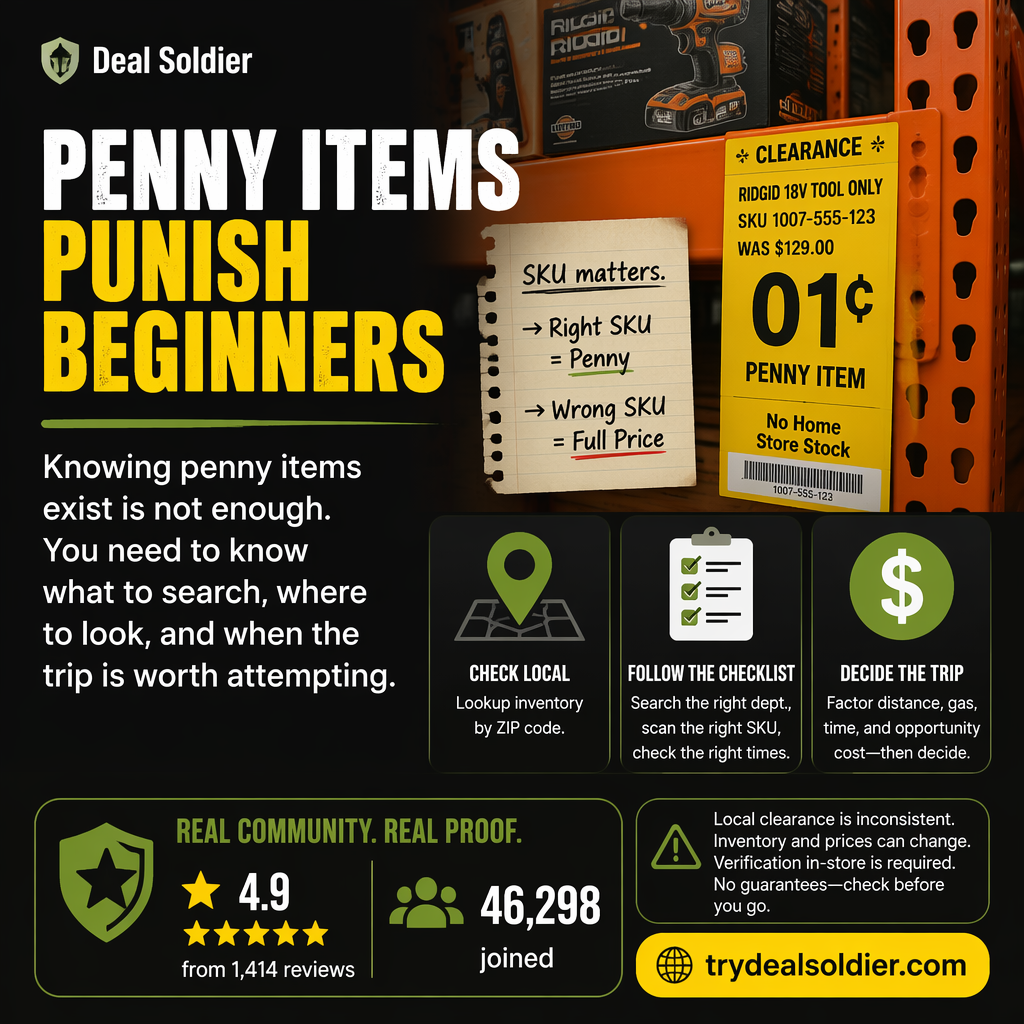
Arriving at a store to find an empty shelf tag does not necessarily mean the deal is dead. Because Walmart stores receive daily freight trucks and have limited floor labor, inventory frequently sits in overhead storage or on backroom staging pallets.
When an alert shows stock but the shelf is bare, follow the 'Two-Tier Inspection Protocol'. First, look directly up at the top riser racks above the shelf. Associates frequently move clearance items up to overhead shelving to clear planogram space for new merchandise. Look for brown master cartons with printed UPC labels matching your target item.
Second, scan adjacent shelves and endcaps. Customers pick up clearance items and abandon them three aisles away. If you locate the product on a top riser, you can politely ask an associate with a ladder cart to retrieve the box, or use the Walmart app's 'Ask an Associate' feature.
| Inspection Step | Action to Take | Probability of Recovery |
|---|---|---|
| 1. Overhead Top Riser | Inspect brown cartons and open boxes directly above | 40% - High likelihood of finding stock |
| 2. Adjacent Endcaps | Check endcaps within 2 aisles in either direction | 25% - Frequently placed on secondary displays |
| 3. Floor Bottom Shelf | Check behind deep kickplates and under bottom shelves | 15% - Pushed back by customers |
| 4. Customer Service Return Cart | Inspect carts near front registers | 10% - Returned or abandoned items |
📋 Actionable Verification Protocol
- Zoom in on overhead inventory labels using your smartphone camera lens.
- Cross-reference the 6-digit or 12-digit item number printed on the box.
- If visible overhead, ask an associate politely: 'Could you please help me get this box down from the top riser?'
Target Decision: Always inspect top risers and adjacent endcaps before declaring an item out of stock.
Action Threshold: Spend 2 minutes checking overhead storage before walking away from an empty shelf.
Immediate Failure Mode: Assuming empty shelf equals zero inventory and leaving sealed boxes overhead.
For additional context on How To Avoid Empty-Shelf Chases, compare this operational step with our detailed breakdown in Walmart vs Target vs Home Depot vs Lowes: Best Stores For Hidden Clearance and cross-reference our field rules in The Real Math Of Clearance Deals.
Personal Use vs Resale
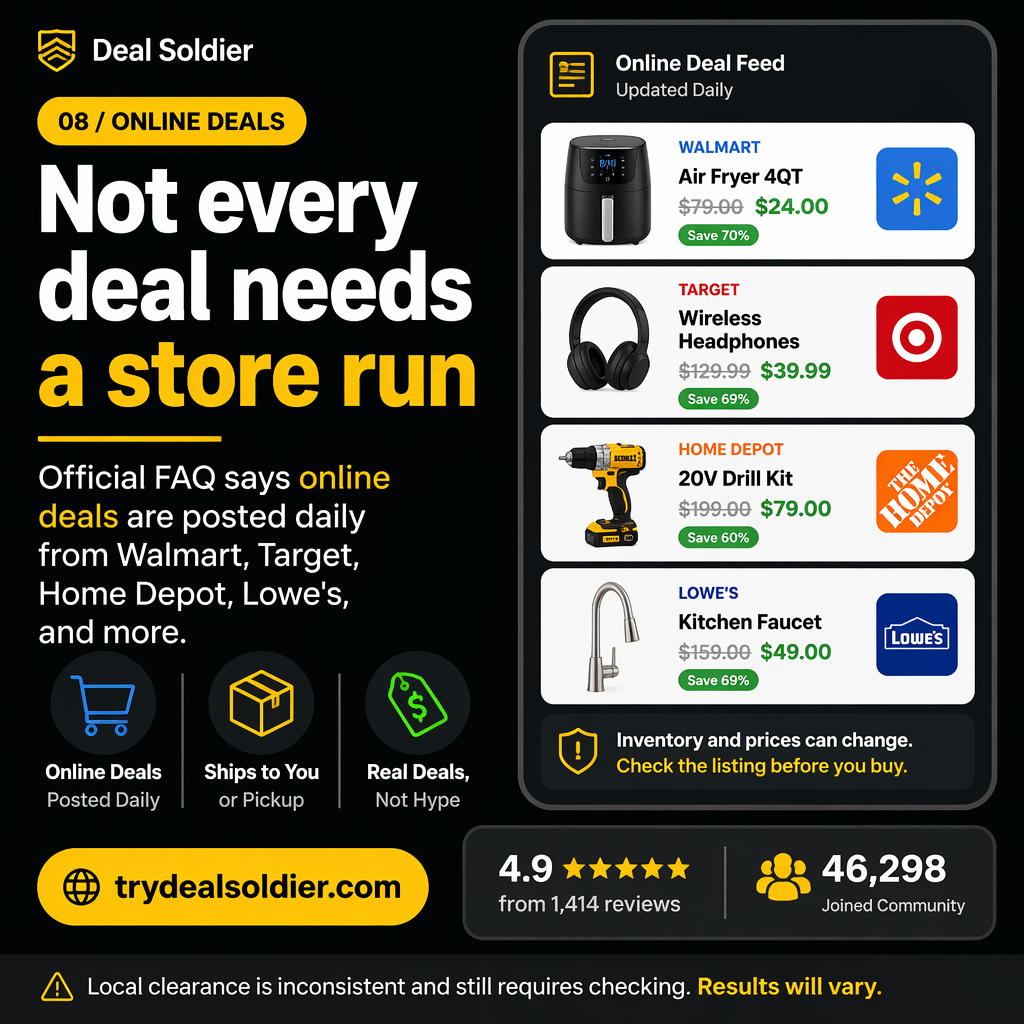
One of the greatest advantages of Walmart hidden clearance is the sheer diversity of categories. Unlike hardware or apparel specialty stores, a single Walmart haul can yield groceries, cleaning supplies, baby items, electronics, and power tools.
Successful operators treat clearance hunting as a dual-engine system. For personal household items (laundry pods, paper towels, shampoo, coffee, canned goods), you lock in an instant, tax-free return by reducing your mandatory living expenses by 50% to 75%.
For non-essential, high-ticket items (smart home tech, designer cookware, brand-name toys, power tools), you evaluate them strictly through a resale lens. By separating your purchases at the register, you maintain clear financial accounting: household savings reduce your budget, while resale profit covers your Deal Soldier subscription and fuels your cash balance.
| Category | Best Strategy | Financial Return Mechanism |
|---|---|---|
| Household Consumables (Detergent, Food) | Personal Household Stockpile | Instant tax-free 50-70% reduction in grocery budget |
| Seasonal Electronics / Smart Home | Resale (eBay / Mercari / FB Marketplace) | Net cash profit (Target 50%+ net margin after fees) |
| High-End Cookware & Small Appliances | Hybrid (Keep what you need, flip duplicates) | Free household upgrades funded by resale profits |
| Apparel / Shoes | Selective Personal Use Only | High return/sizing risk for resale; great for family use |
📋 Actionable Verification Protocol
- Establish separate payment or tracking methods for household vs resale purchases.
- For resale candidates, check completed eBay sold listings before putting items in your cart.
- Store personal stockpile items in an organized pantry or garage shelving system.
Target Decision: Implement a hybrid strategy to extract both cash savings and resale income from Walmart.
Action Threshold: Only buy resale items that offer at least a 40% net profit margin after all fees.
Immediate Failure Mode: Buying resale items without checking demand and cluttering your home with unsellable products.
For additional context on Personal Use vs Resale, compare this operational step with our detailed breakdown in What Is Hidden Clearance? and cross-reference our field rules in Should You Flip That Clearance Find?.
Deal Soldier Trial Test
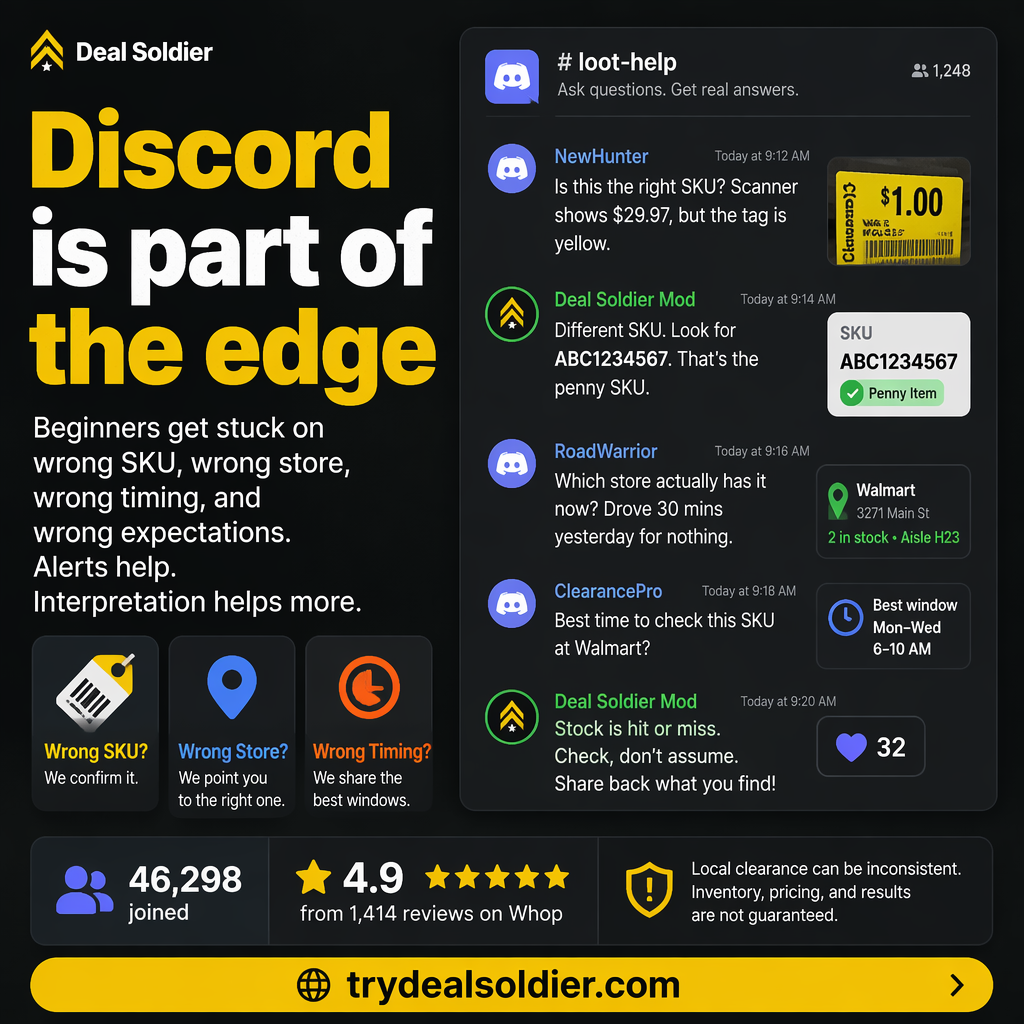
To test Deal Soldier at Walmart during your trial, follow this simple protocol. On Day 2 or 3 of your trial, open the Walmart channel inside the Deal Soldier Discord. Filter for alerts within your metro area that show active price drops on consumer electronics, kitchen goods, or lawn care.
Select one specific store location that has multiple verified alerts. Plan to stop by that store during your routine morning errands. Walk directly to the target departments, check the designated shelves and top risers, and scan the physical barcodes.
Even if you only purchase two or three items that save you $40 to $60, you have established definitive proof. You now know that the information stream is accurate, the price drops are live in your local district, and the membership fee can be recovered with a single trip.
| Trial Stage | Target Action | Success Metric |
|---|---|---|
| 1. Lead Selection | Select 2-3 Walmart SKUs showing 60%+ drops in your area | Verified local price drops in system |
| 2. Store Run | Visit target Walmart during morning restocking hours | Physical presence in store within 30 mins |
| 3. Barcode Audit | Scan barcodes on target SKUs using in-store scanner | Register confirms the clearance price |
| 4. ROI Calculation | Compare gross savings to $44 monthly subscription | Net savings exceed $44 benchmark |
📋 Actionable Verification Protocol
- Download your store's layout map inside the Walmart consumer app.
- Locate the items quickly without browsing unrelated departments.
- Log your receipt in your 7-day trial scorecard.
Target Decision: Run your Walmart field test within the first 4 days of activating your trial.
Action Threshold: Documenting at least $40+ in verified savings on a single store visit.
Immediate Failure Mode: Delaying your store test until Day 7 and feeling pressured to decide without data.
For additional context on Deal Soldier Trial Test, compare this operational step with our detailed breakdown in The Real Math Of Clearance Deals and cross-reference our field rules in Deal Soldier 7-Day Trial Checklist.
Common Beginner Errors
Beginners at Walmart frequently fall into three classic traps. Trap #1 is 'Discount Worship': purchasing low-demand holiday novelties, obscure phone cases, or odd-sized apparel just because they are marked down to $1. If you cannot use the item in your household and nobody on eBay wants to buy it, you haven't saved money—you have spent money on landfill.
Trap #2 is 'Tag Tampering Paranoia': feeling guilty or nervous when scanning unmarked items, leading to awkward interactions with store employees. Remember: checking prices is a standard, built-in feature of the Walmart app.
Trap #3 is 'Cart Hoarding Without Checking': loading up 15 units of an item before scanning them, only to discover at checkout that the price has not dropped at that specific location. Always scan the first unit before loading your cart.
| Beginner Error | Consequence | Professional Correction |
|---|---|---|
| Discount Worship | Wasting money on junk that sits in garage forever | Only buy items with verified household utility or resale demand |
| Bulk Buying Before Scanning | Awkward self-checkout voiding when items ring up full price | Always scan one unit at the shelf before loading the cart |
| Cashier Confrontation | Arguing over price tags and getting banned | If it rings full price, politely cancel; never argue |
| Ignoring Return Windows | Getting stuck with damaged or missing-part clearance items | Inspect boxes before leaving store; test items within 14 days |
📋 Actionable Verification Protocol
- Inspect all clearance packaging to ensure factory seals are intact.
- Check eBay completed/sold listings before buying multiples for resale.
- Keep your shopping cart neat and organized at all times.
Target Decision: Avoid the emotional trap of buying low-utility items solely for the discount tag.
Action Threshold: Ask: 'Would I pay half this price if I had to keep it forever?'
Immediate Failure Mode: Transforming cash into unsellable clearance inventory that clutters your home.
For additional context on Common Beginner Errors, compare this operational step with our detailed breakdown in Should You Flip That Clearance Find? and cross-reference our field rules in Walmart vs Target vs Home Depot vs Lowes: Best Stores For Hidden Clearance.
FAQ
Beginners often have practical questions about Walmart clearance operations: How does the Walmart app scanner work? Why does the app show one price and the register another? Can you price match clearance between Walmarts?
First, understand that the Walmart app has two modes: 'Online Mode' and 'In-Store Mode'. When you connect to Walmart store Wi-Fi or enable location permissions, the app switches to In-Store mode and reflects local pricing. However, for true hidden clearance, in-store scanner kiosks or self-checkout registers remain the ultimate source of truth.
Second, Walmart policy strictly prohibits price-matching clearance items between different store locations. Each store's clearance is independent. If Store A marks an item to $10, Store B is under zero obligation to match that price.
| Question | Direct Policy Answer | Hunter Takeaway |
|---|---|---|
| Can you price match clearance? | No. Walmart policy strictly forbids matching clearance prices between stores | Buy the deal at the store where it is marked down |
| Why does app show online price? | App defaults to Walmart.com fulfillment if in-store barcode isn't recognized | Use in-store price check kiosks or self-checkout scanners |
| Can clearance items be returned? | Yes, standard 90-day return policy applies unless marked 'Final Sale' | Save digital receipts inside the Walmart app |
| Are electronics locked up? | Yes, ask an associate to unlock; take item directly to register | Verify price at the electronics counter register |
📋 Actionable Verification Protocol
- Toggle your Walmart app location to 'In-Store' when entering the building.
- Always keep digital receipts stored in your Walmart account.
- Respect store associates: they are following corporate retail guidelines.
Target Decision: Operate with complete clarity on Walmart's store-specific pricing policies.
Action Threshold: Never attempt to price match clearance across different Walmart locations.
Immediate Failure Mode: Creating friction at checkout by demanding policy exceptions that do not exist.
For additional context on FAQ, compare this operational step with our detailed breakdown in Deal Soldier 7-Day Trial Checklist and cross-reference our field rules in What Is Hidden Clearance?.