Deal Soldier Field Intelligence
Should You Flip That Clearance Find?
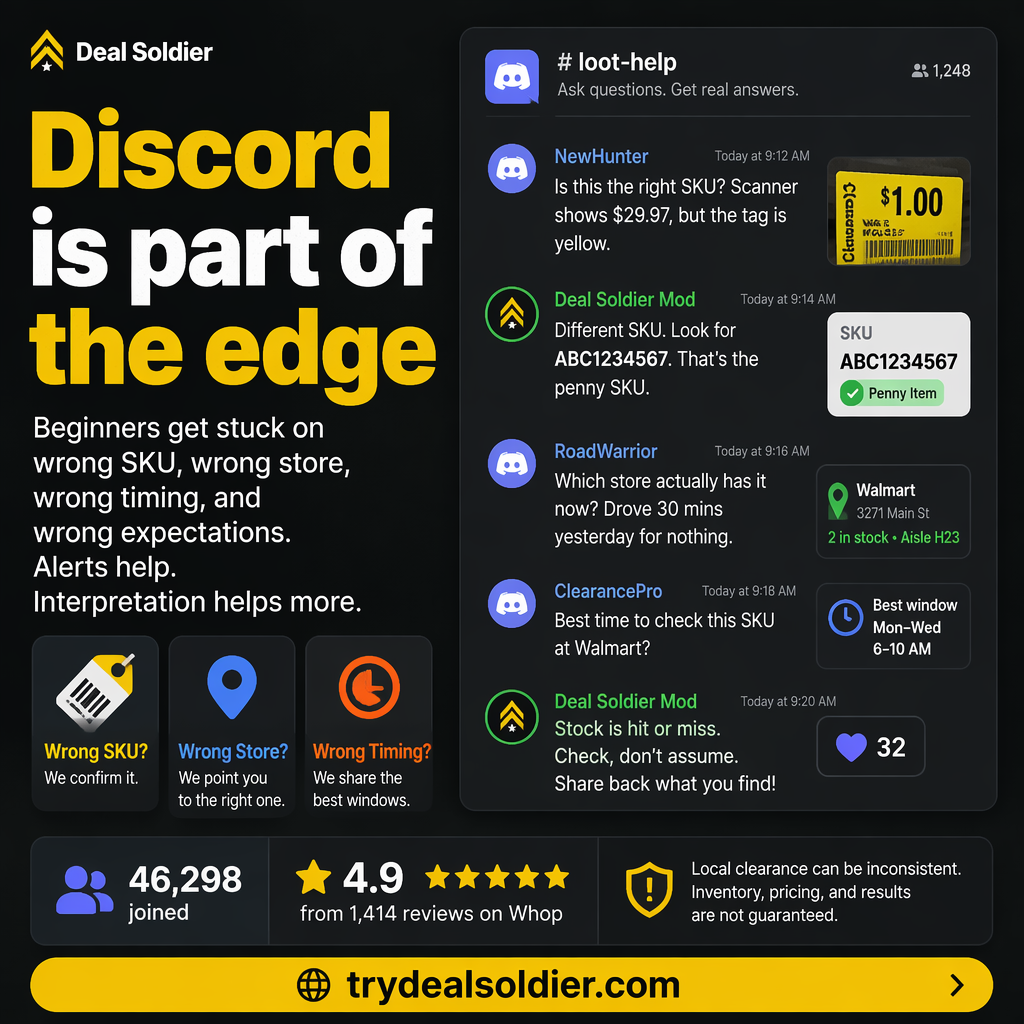
If you are fighting cheap inventory hoarding, use this operational test: unsold clearance stock is cash trapped on a shelf
Start the Deal Soldier 7-day trial on Whop
The Field Investigation: What We Are Actually Testing
If you are investigating Deal Soldier, you have likely seen viral social clips: shopping carts loaded with $25 laptops, $3 designer rugs, and penny clearance finds in big-box stores. But viral posts skip the operational friction: store inventory algorithms, shelf tagging lag, phantom stock, and the reality of resale fees.
The core trap we are deconstructing in this guide is cheap inventory hoarding. The operational rule of thumb is straightforward: unsold clearance stock is cash trapped on a shelf. If you cannot establish a systematic local workflow that produces verified savings during your 7-day free trial, you should cancel immediately on Whop.
Below is our complete field investigation for Should You Flip That Clearance Find?, broken down scene-by-scene into store mechanics, algorithm breakdowns, and actionable testing protocols.
The Flip Trap
The 'Flip Trap' is the single most common failure mode in retail clearance sourcing. Finding an item at Walmart or Home Depot marked down from $100 to $20 triggers an intense dopamine rush. You feel like you just discovered buried treasure.
Novices fill their shopping carts with armfuls of random merchandise, swipe their credit card, and drive home feeling victorious. But the moment they unload those bags into their house, reality sets in. The items must be unboxed, inspected, photographed, cataloged, listed with descriptions, and stored.
Within a few weeks, the initial excitement fades. The unlisted merchandise piles up in spare bedrooms, closets, and garages—a psychological weight known as the 'Death Pile'. You have spent hundreds of dollars of real cash, and in exchange, you have cluttered your living space with unsellable plastic.
| Stage in Flipping Lifecycle | Emotional Experience | Actual Financial Reality | Common Pitfall |
|---|---|---|---|
| 1. Sourcing at Store | Euphoria / Thrill of the hunt | Immediate cash outflow (-$150.00) | Overbuying unvetted inventory |
| 2. Storing at Home | Procrastination / Overwhelm | Zero income; living space clutter | Accumulating 'death piles' |
| 3. Listing & Photographing | Laborious friction | Time investment (15-20 mins/item) | Postponing listing indefinitely |
| 4. Selling & Shipping | Modest satisfaction | Net cash recovery (+fees/shipping) | Discovering net margin was tiny |
📋 Actionable Verification Protocol
- Never buy new clearance inventory if you have more than 3 unlisted items sitting at home.
- Enforce a strict 'List Within 48 Hours' rule for every physical purchase.
- If you hate photography and shipping, use Deal Soldier exclusively for personal savings.
Target Decision: Assess whether you genuinely enjoy the operational labor of eCommerce before buying to flip.
Action Threshold: Limit your initial sourcing to items you can list online the very same evening.
Immediate Failure Mode: Turning your living space into a warehouse for unlisted, stagnant clearance products.
For additional context on The Flip Trap, compare this operational step with our detailed breakdown in The Real Math Of Clearance Deals and cross-reference our field rules in Walmart vs Target vs Home Depot vs Lowes: Best Stores For Hidden Clearance.
Demand First
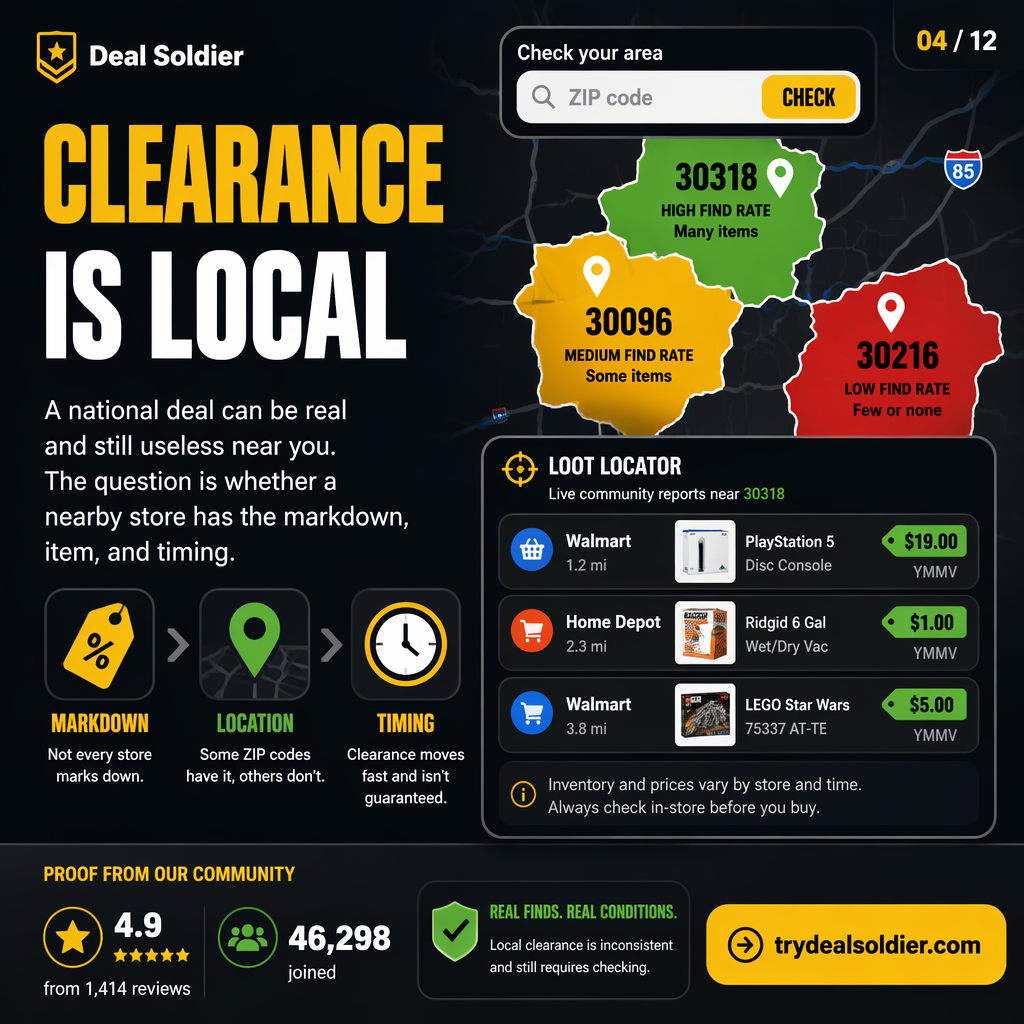
Retail stores do not mark items down out of generosity. They mark items down because their computer systems indicate that consumer demand has collapsed, and the product is occupying valuable shelf space needed for faster-moving goods.
Before you put a single clearance item in your cart to flip, you must confirm that secondary market demand exists. Secondary demand cannot be assumed; it must be proven with empirical sales data.
Experienced resellers check historical velocity using tools like eBay's Product Research (formerly Terapeak) or Keepa sales rank graphs for Amazon. They look for consistent daily or weekly sales transactions. If an item has only sold twice in the past ninety days across the entire United States, buying five of them guarantees you will hold that inventory for years.
| Demand Indicator | Data Metric | Risk Level | Sourcing Action |
|---|---|---|---|
| High Secondary Demand | 10+ units sold per week; steady pricing | Very Low | Buy immediately; high-velocity flip |
| Moderate Demand | 1 - 3 units sold per week | Low - Medium | Buy if net profit exceeds $20 per unit |
| Stagnant / Dead Demand | 0 - 1 units sold in last 90 days | Extreme | Hard Pass: Leave on shelf regardless of price |
| Seasonal Surge | Heavy sales in specific quarter (e.g. Q4 toys) | Variable | Buy only ahead of seasonal window, never after |
📋 Actionable Verification Protocol
- Filter eBay search results by 'Sold Items' and check the dates of the last 5 completed sales.
- Confirm that sales occurred recently (within the last 7 to 14 days).
- Verify that sold prices are consistent and not skewed by a single outlier sale.
Target Decision: Validate empirical secondary market demand before examining the clearance discount.
Action Threshold: Require at least 3 verified sales in the past 30 days for any candidate flip.
Immediate Failure Mode: Purchasing obscure, dead-inventory clearance that nobody is searching for online.
For additional context on Demand First, compare this operational step with our detailed breakdown in Is Deal Soldier Good For Resellers? and cross-reference our field rules in Deal Soldier 7-Day Trial Checklist.
Fee Reality
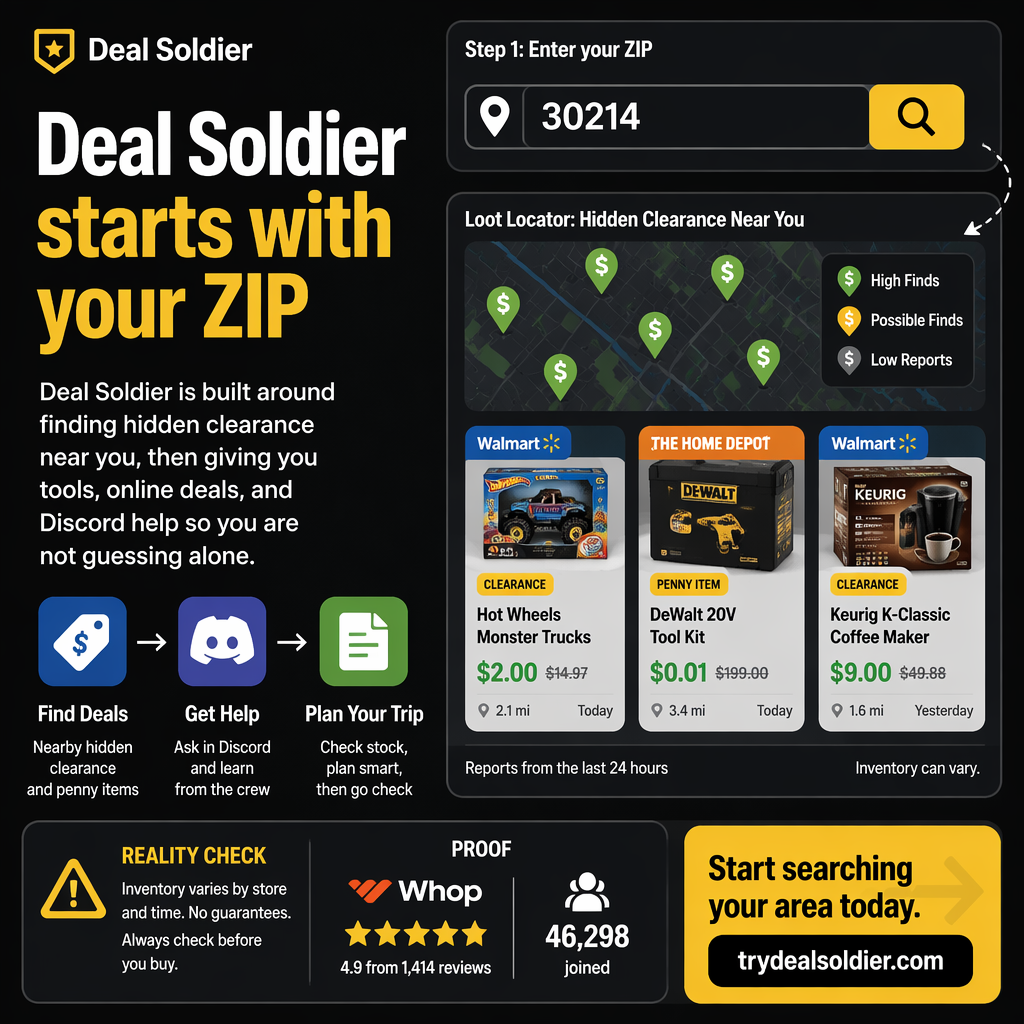
To succeed in retail flipping, you must develop an unemotional understanding of platform economics. When a buyer pays $60 for an item you listed online, that $60 does not enter your checking account.
First, the platform charges a Final Value Fee on the entire transaction amount—including the sales tax and shipping cost paid by the customer. Then, if you promoted the listing to gain visibility against competing clearance sellers, an advertising fee is deducted.
Next comes the shipping carrier. With recent carrier rate increases across USPS Ground Advantage, UPS Ground, and FedEx Home Delivery, shipping a 3-pound package across three postal zones easily costs $9 to $14. Add $2 for a corrugated box, bubble wrap, and label tape, and your expenses have consumed a massive chunk of your gross revenue.
| Expense Category | Typical Cost on $50 Sale | Who Takes the Cut? | How to Minimize |
|---|---|---|---|
| Marketplace Commission | $6.63 - $8.50 (13.25% - 17%) | eBay / Amazon / Mercari | Optimize store subscription tiers |
| Payment Processing | Included in marketplace fee | Managed Payments / Adyen | N/A (Standardized) |
| Carrier Outbound Shipping | $7.50 - $14.00 (weight/size) | USPS / UPS / FedEx | Use discounted commercial rates (Pirate Ship) |
| Packaging Materials | $1.50 - $3.00 per order | Box, tape, dunnage suppliers | Source boxes in bulk or recycle clean boxes |
📋 Actionable Verification Protocol
- Purchase shipping labels through commercial rate providers like Pirate Ship or eBay Labels.
- Factor packaging material costs into your baseline sourcing calculations.
- Avoid selling low-price heavy items where shipping costs exceed the product value.
Target Decision: Account for the full 35% to 45% platform and carrier take-rate on every potential flip.
Action Threshold: Only flip items where the gross spread is wide enough to absorb comprehensive fees.
Immediate Failure Mode: Basing flipping projections on gross sales and running an unprofitable operation.
For additional context on Fee Reality, compare this operational step with our detailed breakdown in Walmart vs Target vs Home Depot vs Lowes: Best Stores For Hidden Clearance and cross-reference our field rules in The Real Math Of Clearance Deals.
Storage Cost
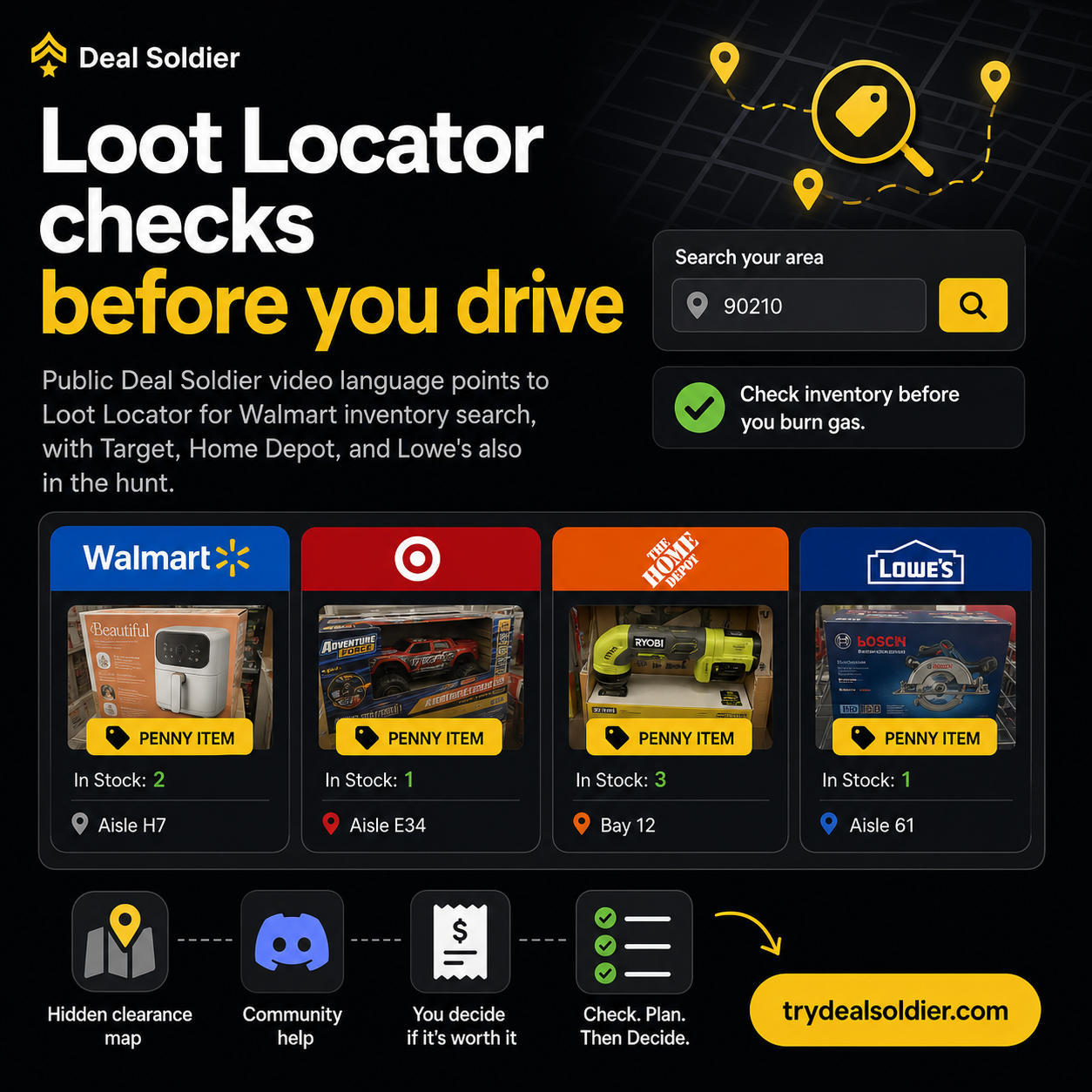
Novice resellers routinely treat their personal living space as free warehouse real estate. They stack plastic bins in bedrooms, fill closets with shoe boxes, and park their cars on the street because their garage is stuffed with clearance merchandise.
This storage comes with severe hidden costs. Physical clutter creates mental fatigue and household friction. Furthermore, items stored in non-climate-controlled environments (like hot attics or humid garages) suffer degradation: packaging warps, adhesive labels peel, and electronics can be damaged by temperature extremes.
Finally, inventory represents trapped liquidity. If you have $2,000 tied up in clearance products sitting in your garage for six months, that capital cannot be deployed into fresh high-velocity deals. Professional operators treat storage space as a finite, expensive resource.
| Storage Location | Direct Financial Cost | Operational Drawback | Max Recommended Hold Time |
|---|---|---|---|
| Living Space / Bedroom | $0.00 / month direct | High domestic stress; visual clutter | Under 14 days (fast turn only) |
| Garage / Basement | $0.00 / month direct | Humidity/temperature risk; car parked outside | 30 to 60 days maximum |
| Dedicated Commercial Unit | $80 - $200 / month | Fixed monthly overhead line-item | Only justifiable at $3k+ monthly profit |
📋 Actionable Verification Protocol
- Designate a strict physical footprint for inventory (e.g., maximum two shelving units).
- Enforce a 'One-In, One-Out' rule once your designated storage capacity is reached.
- Liquidate or donate any inventory item that has occupied shelf space for over 90 days.
Target Decision: Constrain your physical inventory footprint to maintain a healthy home environment.
Action Threshold: Do not source large, bulky clearance items unless they yield $40+ net and sell within 14 days.
Immediate Failure Mode: Allowing unlisted clearance inventory to overwhelm your personal living space.
For additional context on Storage Cost, compare this operational step with our detailed breakdown in Deal Soldier 7-Day Trial Checklist and cross-reference our field rules in Is Deal Soldier Good For Resellers?.
Returns
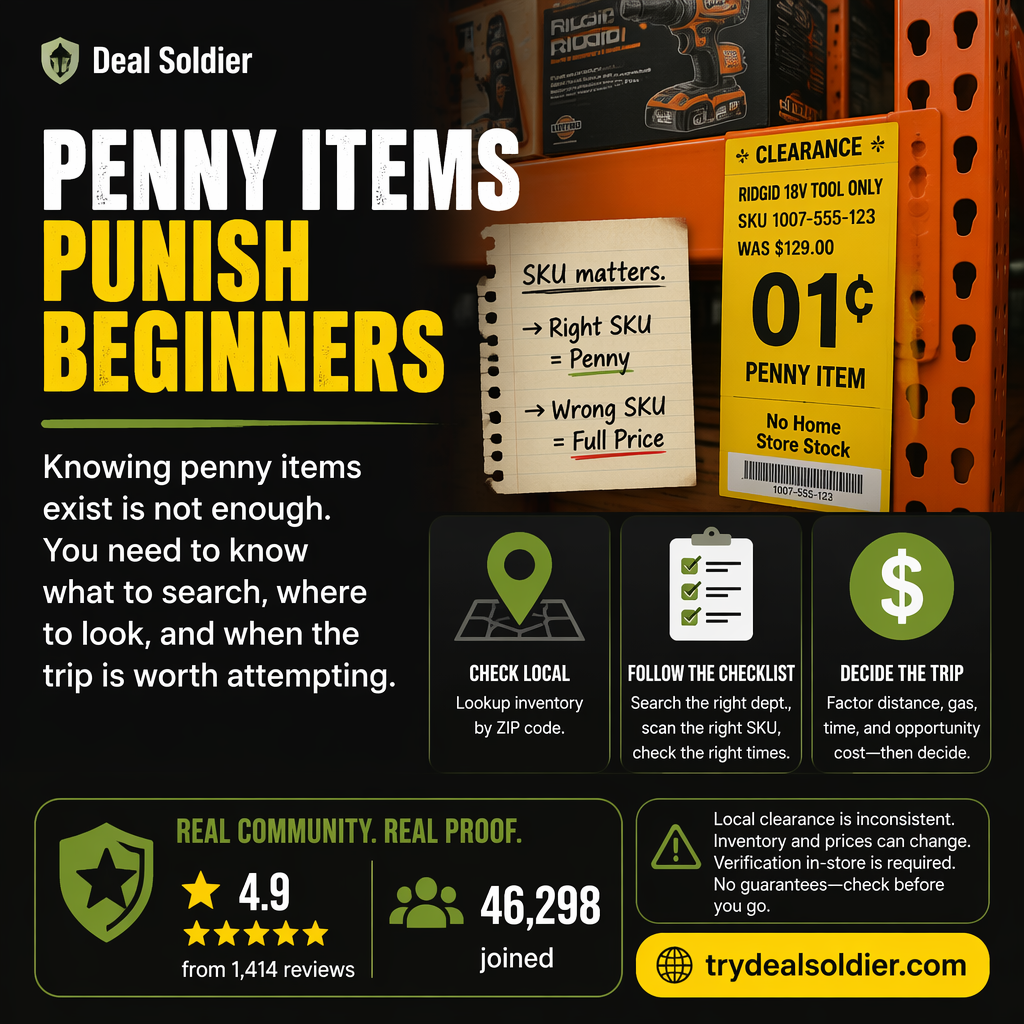
Many new sellers check the 'No Returns' box when creating an eBay listing and believe they are legally protected from returns. This is an illusion.
All major online marketplaces enforce mandatory buyer satisfaction guarantees. If a customer receives a clearance item and claims it is defective, missing a part, or 'not as described', the platform will automatically override your return policy, generate a prepaid return label at your expense, and place a financial hold on your funds.
When dealing with clearance goods, return risks are heightened. Clearance items have often been handled by dozens of store shoppers, packaging may have been opened and taped shut, or internal accessories may be missing. If you sell an incomplete clearance item as 'Brand New', a forced return is guaranteed.
| Return Scenario | Platform Resolution | Financial Impact on Seller | Prevention Rule |
|---|---|---|---|
| Buyer Remorse ('Changed Mind') | Honors 'No Return' policy on eBay | $0 loss (if policy set to No Returns) | State 'No Returns Accepted' on listing |
| Item Not As Described (INAD) | Forced return override; buyer wins | Seller pays outbound & return shipping | Inspect all factory seals before buying |
| Switch / Return Fraud | Extremely difficult seller dispute | Loss of item + loss of cash | Serial number recording & police report |
| Transit Damage | Carrier insurance claim required | Temporary fund hold during claim | Overpack with robust bubble wrap & boxes |
📋 Actionable Verification Protocol
- Never list a clearance item as 'Brand New' if the factory tape seals are broken or cut.
- If a box shows shelf wear, list it as 'New (Other)' or 'Open Box' and photograph every flaw.
- Keep a dedicated cash buffer in your bank account to handle unexpected return holds.
Target Decision: Inspect every clearance item meticulously to eliminate missing-part return disputes.
Action Threshold: Downgrade condition ratings from 'New' to 'Open Box' at the slightest sign of box wear.
Immediate Failure Mode: Listing resealed clearance returns as brand new, leading to account performance defects.
For additional context on Returns, compare this operational step with our detailed breakdown in The Real Math Of Clearance Deals and cross-reference our field rules in Walmart vs Target vs Home Depot vs Lowes: Best Stores For Hidden Clearance.
Category Risk
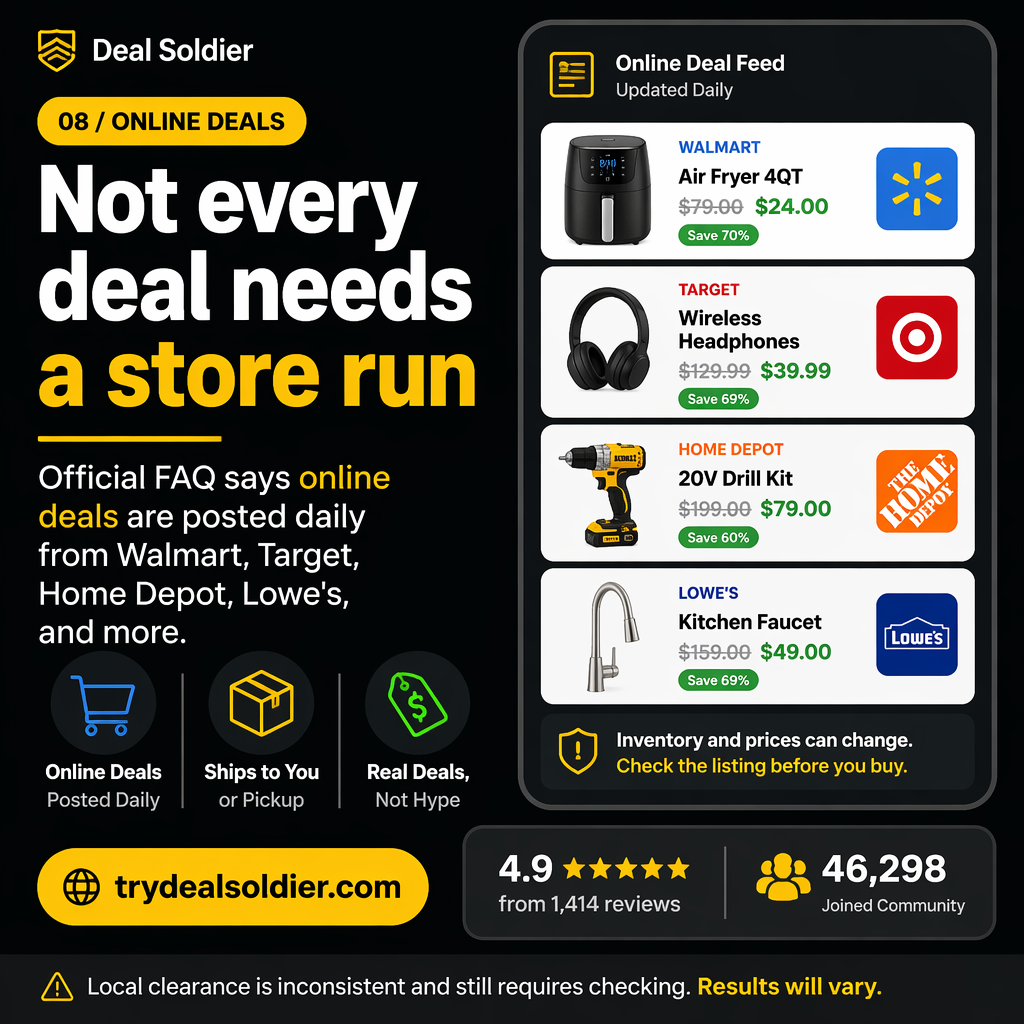
Not all clearance categories are created equal. Novice clearance hunters frequently get burned by purchasing products in restricted or 'gated' categories.
On Amazon, thousands of major brands (Nike, Apple, Disney, LEGO, Sony) and entire product categories (Topical Beauty, Grocery, Baby Safety) require official commercial distributor invoices to sell. Retail store clearance receipts from Walmart or Target are strictly rejected as valid invoices for ungating.
On eBay and Mercari, high-risk categories like designer handbags, high-end electronics, and cosmetics are heavily targeted by automated counterfeit detection algorithms (VERO - Verified Rights Owner program). Receiving a VERO intellectual property strike can result in permanent account suspension.
| Category | Flipping Risk Level | Primary Restriction / Hazard | Recommended Resale Channel |
|---|---|---|---|
| Hardware & Hand Tools | Very Low | Ungated; durable; low counterfeit risk | eBay / Facebook Marketplace |
| Toys & Board Games | Low - Moderate | Some brand gating on Amazon; safe on eBay | eBay / Mercari |
| Consumer Electronics | High | High return rates; warranty transfer issues | eBay (test thoroughly) / Local Cash |
| Topical Beauty & Perfume | Extreme | Heavy gating; VERO strikes; expiration dates | Skip entirely unless ungated pro |
📋 Actionable Verification Protocol
- Download the Amazon Seller app and eBay app to check listing permissions in the store aisle.
- Stick to low-risk categories (tools, outdoor equipment, home hardware) when starting out.
- Avoid branded designer fashion, luxury perfume, and medical/baby safety products.
Target Decision: Focus your clearance sourcing on low-risk, ungated categories with minimal VERO exposure.
Action Threshold: Scan items with the Amazon Seller app to verify ungated status before purchasing.
Immediate Failure Mode: Spending hundreds of dollars on clearance inventory that you are legally prohibited from selling.
For additional context on Category Risk, compare this operational step with our detailed breakdown in Is Deal Soldier Good For Resellers? and cross-reference our field rules in Deal Soldier 7-Day Trial Checklist.
Buy One Before Ten
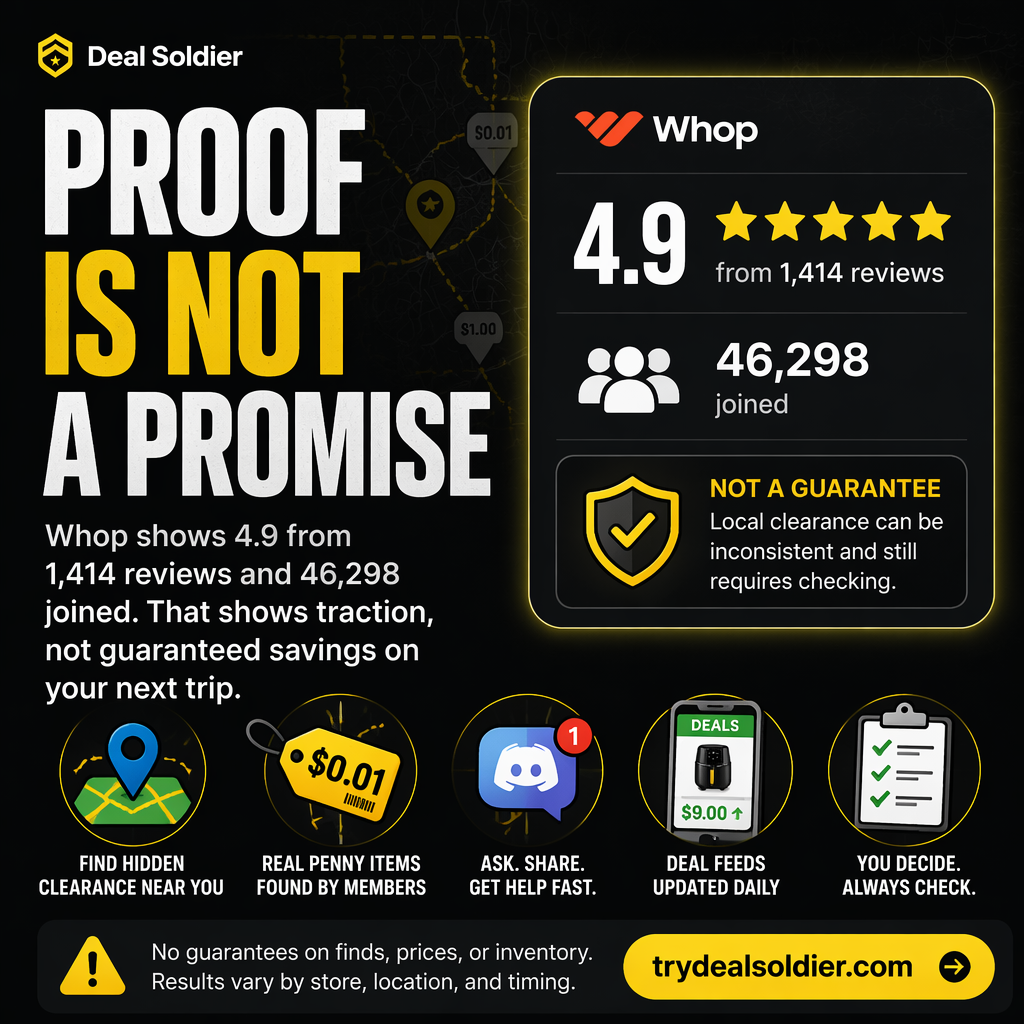
The hardest rule for beginner clearance hunters to follow is the 'Buy One Before Ten' protocol. When you discover an unstickered clearance item with an apparent $50 profit margin and there are twenty units on the shelf, your immediate instinct is to clear the shelf.
This is how massive financial catastrophes occur. If you buy all twenty units for $500, and then discover that the brand triggers a VERO copyright strike on eBay, or that shipping costs $22 instead of $10, or that another hundred clearance hunters flooded the market that same afternoon, you are trapped with twenty unsellable paperweights.
Professional risk management dictates testing the pipeline first. Buy ONE unit. Take it home, photograph it, list it online, and see how long it takes to sell. Experience the exact packaging dimensions and calculate your real net profit down to the penny. If it sells in 48 hours with healthy margin, you can return to the store or use Deal Soldier's Turbo Search to sweep other regional locations with complete confidence.
| Sourcing Approach | Capital at Risk | Failure Consequence | Market Learning Value |
|---|---|---|---|
| Clear The Shelf (Greed) | $500 - $1,500 cash | Trapped dead stock; domestic disaster | Catastrophic learning curve |
| Buy One Test Unit (Discipline) | $25 - $50 cash | Minimal loss; easy personal use | High: Verifies exact velocity & shipping |
| Multi-Store Sweep (Validated) | $1,000+ deployed | Low: Backed by verified sales proof | Maximum safe capital scaling |
📋 Actionable Verification Protocol
- Restrict yourself to purchasing exactly 1 unit of an unfamiliar SKU on your first discovery.
- List the single test unit within 24 hours of arriving home.
- Only execute multi-unit sweeps after the test unit sells and produces verified net profit.
Target Decision: Enforce the 'Buy One Before Ten' protocol on all unfamiliar products and brands.
Action Threshold: Require a successful single-unit sale before committing more than $100 to any SKU.
Immediate Failure Mode: Clearing entire retail shelves on unvetted items and absorbing severe multi-unit losses.
For additional context on Buy One Before Ten, compare this operational step with our detailed breakdown in Walmart vs Target vs Home Depot vs Lowes: Best Stores For Hidden Clearance and cross-reference our field rules in The Real Math Of Clearance Deals.
Deal Soldier Use Case
How do successful members actually use Deal Soldier to flip clearance without falling into the traps outlined in this guide? They operate surgically rather than frantically.
Instead of driving around aimlessly hoping to find random clearance items, they configure Deal Soldier's tools to filter for proven, high-demand categories: power tools (DeWalt, Milwaukee, Ryobi), commercial hardware, seasonal lawn equipment, and premium consumer goods.
When SniperX alerts them to an unstickered price reduction at a store along their standard daily commute, they check Turbo Search to confirm stock count. They walk into the store, pick up 2 to 4 units, check out at self-checkout, and list them online that evening. This structured workflow turns retail arbitrage from a chaotic gamble into an organized, profitable side business.
| Operational Step | Amateur Method (Chaotic) | Deal Soldier Method (Structured) |
|---|---|---|
| 1. Sourcing Strategy | Driving blindly to 5 stores hoping for deals | Targeting specific stores flagged by Turbo Search |
| 2. Product Selection | Random novelty clearance with high discounts | High-demand, ungated power tools and hardware |
| 3. Time Commitment | 15 - 20 hours of frustrating store wandering | 2 - 3 targeted 30-minute visits per week |
| 4. Monthly Financial Outcome | Net loss after fuel, fees, and dead inventory | +$300 to +$1,000 net supplemental income |
📋 Actionable Verification Protocol
- Set up Deal Soldier alert channels to monitor high-velocity hardware and tool categories.
- Plan store visits exclusively around confirmed multi-unit inventory drops.
- Maintain a dedicated spreadsheet tracking buy cost, sell price, fees, and net profit.
Target Decision: Use Deal Soldier as a precision targeting system for high-velocity clearance flips.
Action Threshold: Target deals with verified secondary market demand and >= $25 net profit per unit.
Immediate Failure Mode: Using advanced intelligence software to source low-margin, high-friction clearance junk.
For additional context on Deal Soldier Use Case, compare this operational step with our detailed breakdown in Deal Soldier 7-Day Trial Checklist and cross-reference our field rules in Is Deal Soldier Good For Resellers?.
FAQ
Entering the retail arbitrage space naturally produces questions regarding legality, store relationships, and business setup.
First: Is retail arbitrage legal? Yes, absolutely. Under the United States Supreme Court's 'First Sale Doctrine' (Quality King Distributors, Inc. v. L'anza Research Int'l, Inc.), once a manufacturer sells a product into the stream of commerce, the buyer possesses the full legal right to resell, donate, or dispose of that item.
Second: Do stores care if you flip their items? Store managers are evaluated on inventory turnover, shrinkage reduction, and sales targets. When aging clearance merchandise sits on their floor, it counts against their operational metrics. As long as you are polite, pay the full computer register price, and don't disrupt other shoppers, managers are happy to see clearance inventory leave their building.
| Common Concern | Legal & Operational Reality | Professional Best Practice |
|---|---|---|
| Is retail flipping legal? | 100% legal under the U.S. First Sale Doctrine | Operate with full transparency and retain receipts |
| Do I need a business license? | Sole proprietorship requires no formal filing initially | Register an LLC and resale tax certificate as volume scales |
| What platform is best for beginners? | eBay offers the lowest category barrier & easiest setup | Start on eBay or Facebook Marketplace before Amazon |
| Can I return unsold inventory? | Standard retailer return policies apply (30-90 days) | Never abuse returns; liquidate through price drops first |
📋 Actionable Verification Protocol
- Download the eBay app and set up a verified seller account with managed payments.
- Keep all store paper receipts organized in a chronological monthly binder.
- Treat retail associates with courtesy: they are your allies in identifying upcoming resets.
Target Decision: Launch your flipping workflow with legal confidence and professional operational standards.
Action Threshold: Start with a single low-risk item on eBay to master the complete fulfillment cycle.
Immediate Failure Mode: Acting confrontational or aggressive with retail employees over clearance inventory.
For additional context on FAQ, compare this operational step with our detailed breakdown in The Real Math Of Clearance Deals and cross-reference our field rules in Walmart vs Target vs Home Depot vs Lowes: Best Stores For Hidden Clearance.