Deal Soldier Field Intelligence
Is Deal Soldier Good For Beginners?
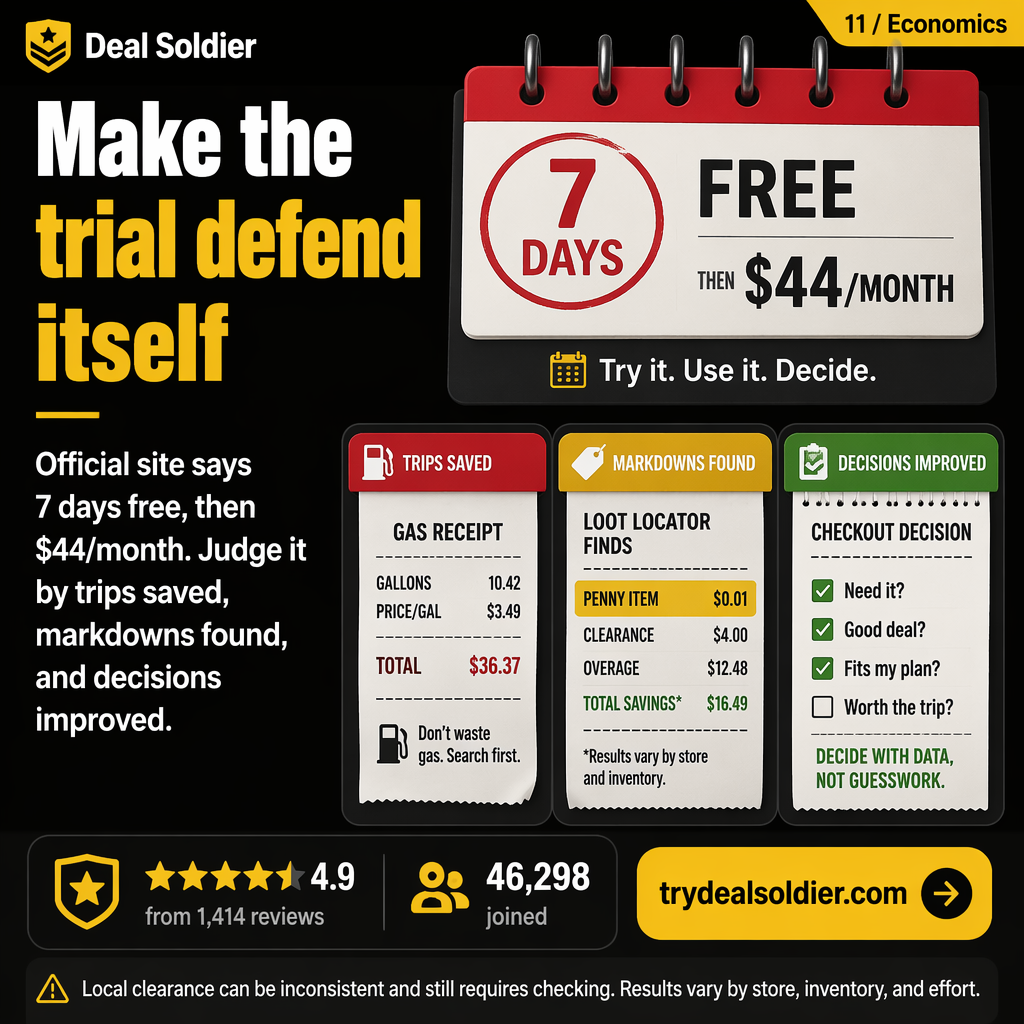
If you are fighting beginner information overload, use this operational test: beginners should measure avoided mistakes before measuring huge wins
Start the Deal Soldier 7-day trial on Whop
The Field Investigation: What We Are Actually Testing
If you are investigating Deal Soldier, you have likely seen viral social clips: shopping carts loaded with $25 laptops, $3 designer rugs, and penny clearance finds in big-box stores. But viral posts skip the operational friction: store inventory algorithms, shelf tagging lag, phantom stock, and the reality of resale fees.
The core trap we are deconstructing in this guide is beginner information overload. The operational rule of thumb is straightforward: beginners should measure avoided mistakes before measuring huge wins. If you cannot establish a systematic local workflow that produces verified savings during your 7-day free trial, you should cancel immediately on Whop.
Below is our complete field investigation for Is Deal Soldier Good For Beginners?, broken down scene-by-scene into store mechanics, algorithm breakdowns, and actionable testing protocols.
Quick Answer
If you have never hunted clearance deals before, joining an active trading community can feel like stepping onto a commercial stock trading floor. Channels scroll rapidly with abbreviations like 'YMMV', 'MSRP', 'BSR', and 'RTV', while members post photos of receipt hauls saving thousands of dollars.
The short answer is: Yes, Deal Soldier is exceptional for beginners—provided you treat your first week as an educational apprenticeship rather than expecting instant effortless riches.
Unlike raw inventory databases that offer zero guidance, Deal Soldier provides a structured beginner curriculum: teaching you how retail pricing algorithms operate, how to read yellow clearance stickers, how to avoid common cashier friction, and how to verify deals locally using your phone.
| Beginner Factor | Platform Reality | Novice Takeaway |
|---|---|---|
| Onboarding Support | Dedicated #beginner-help channel & video tutorials | Ask questions freely with zero judgment from mentors |
| Technical Barrier | Standard Discord interface + web lookup tools | Easy setup; works on any iPhone, Android, or PC |
| Financial Risk | 7-day free trial on Whop (1-click cancellation) | Zero upfront financial risk to test local feasibility |
| Time to First Win | Typically within first 3 store visits (Days 3-5) | Learn a permanent life skill that saves money forever |
📋 Actionable Verification Protocol
- Start with the 7-day trial and head straight to the welcome onboarding channel.
- Mute advanced reseller channels for your first 48 hours to avoid information overload.
- Focus on personal household items first before attempting online resale.
Target Decision: Join the 7-day trial with the mindset of learning a new practical life skill.
Action Threshold: Complete the beginner video tutorials on Day 1 before visiting any stores.
Immediate Failure Mode: Getting intimidated by advanced terminology and quitting before trying your first scan.
For additional context on Quick Answer, compare this operational step with our detailed breakdown in What Is Hidden Clearance? and cross-reference our field rules in Deal Soldier 7-Day Trial Checklist.
What Beginners Actually Need
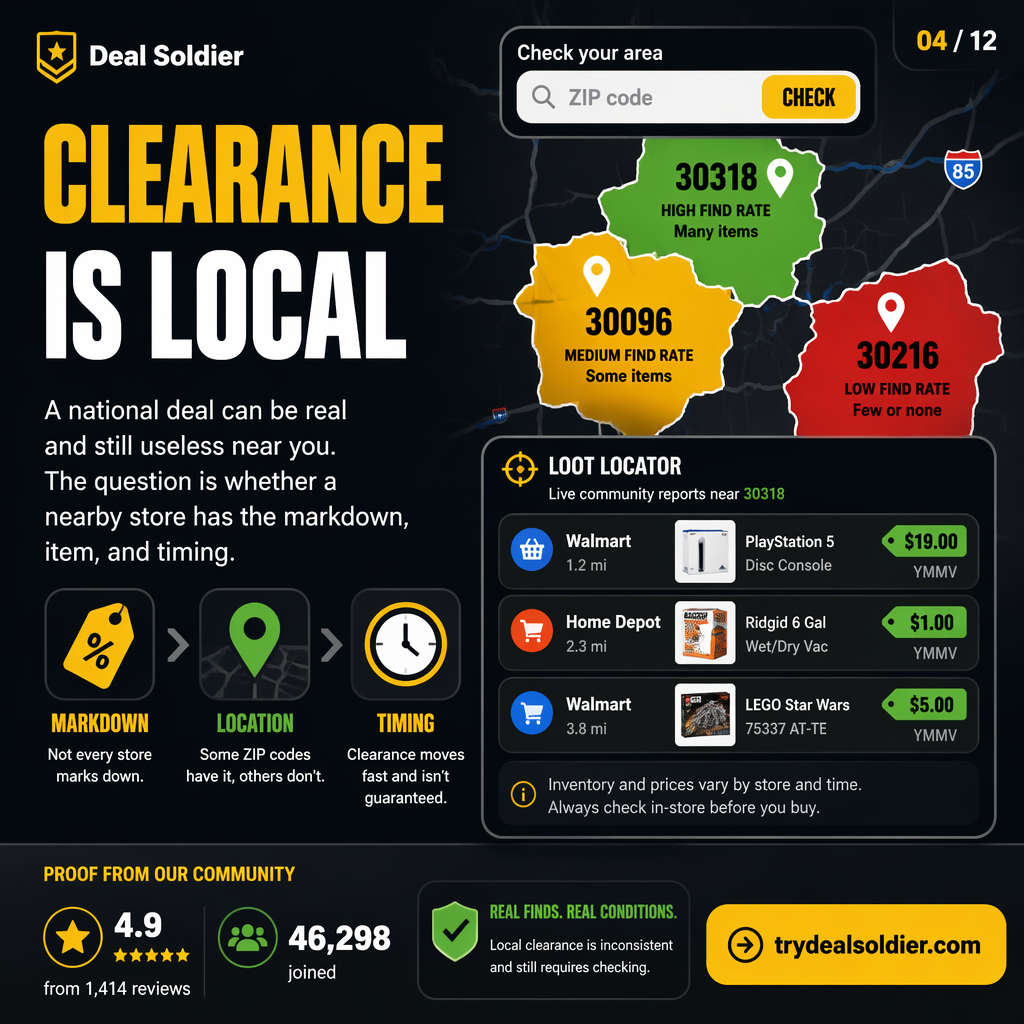
When novices struggle in deal hunting, it is rarely due to a lack of deals. It is due to a lack of fundamental retail literacy. Giving an uneducated beginner a high-speed corporate markdown feed is like giving a learner driver the keys to a Formula 1 racecar: they will inevitably crash.
What beginners actually need are four basic competencies: First, understanding that shelf tags are often outdated historical markers. Second, knowing how to operate their smartphone barcode scanner in Store Mode.
Third, understanding that cashiers do not set prices—the central Point of Sale database does. Fourth, learning to manage their emotions so they don't buy useless clearance clutter simply because a yellow tag says 80% off.
| Competency | What It Teaches | Why It Matters |
|---|---|---|
| Barcode Literacy | How UPC-A barcodes query store POS databases | Gives you confidence that the scanner price is the real price |
| Store Geography | Locating top risers, bottom kickplates, and endcaps | Allows you to find the 80% of clearance hidden from plain sight |
| Checkout Confidence | Using self-checkout terminals smoothly | Eliminates all social anxiety and cashier friction |
| Budget Discipline | Saying 'no' to cheap junk you don't need | Protects your bank balance from clearance hoarding |
📋 Actionable Verification Protocol
- Master the in-app barcode scanner before visiting your first store.
- Practice using self-checkout stations for all clearance testing.
- Establish a strict personal rule: only buy items your household actively consumes.
Target Decision: Focus your first week on mastering the four core retail competencies.
Action Threshold: Verify that you can scan and decode a barcode in under 5 seconds.
Immediate Failure Mode: Skipping the fundamentals and making expensive beginner mistakes.
For additional context on What Beginners Actually Need, compare this operational step with our detailed breakdown in Walmart Hidden Clearance Guide and cross-reference our field rules in Deal Soldier Review: Is It Worth $44/Month?.
Terms To Learn
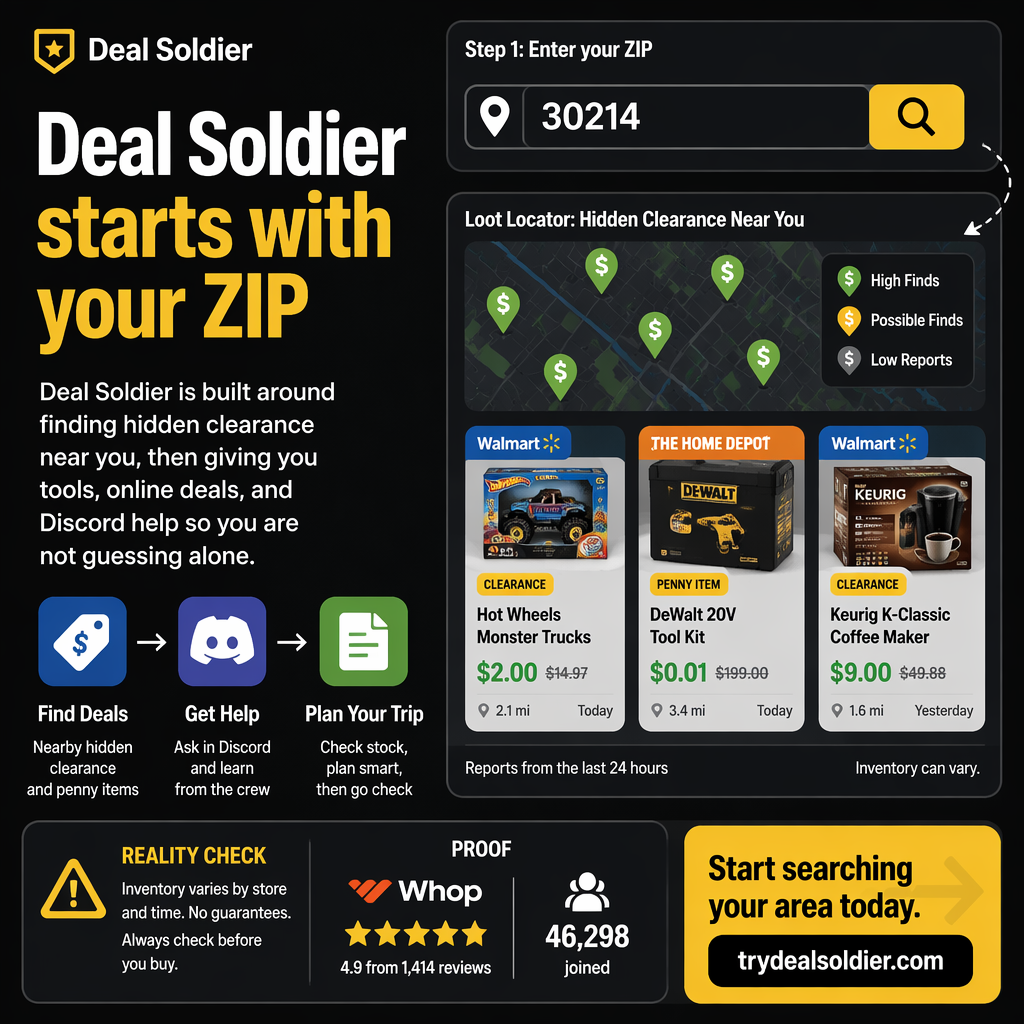
Stepping into a deal-hunting community without knowing the terminology is confusing. Members use shorthand abbreviations to communicate rapid intelligence across channels.
The most critical acronym is 'YMMV' (Your Mileage May Vary). This indicates that a clearance markdown is store-specific or regional—it may be live at Store A, but not at Store B. When you see YMMV, never drive without checking Turbo Search.
'MSRP' stands for Manufacturer's Suggested Retail Price. 'UPC' is the 12-digit Universal Product Code barcode. 'SKU' is the store's internal Stock Keeping Unit. 'RTV' means Return to Vendor (salvage write-down). 'BSR' is Amazon's Best Sellers Rank, and 'POS' is the Point of Sale cash register system.
| Acronym | Full Term | What It Means In The Aisle |
|---|---|---|
| YMMV | Your Mileage May Vary | The deal is store-specific; verify your local store before traveling |
| UPC | Universal Product Code | The 12-digit barcode printed on the physical packaging |
| SKU | Stock Keeping Unit | The internal 6-to-9 digit number retailers use to track inventory |
| RTV | Return To Vendor | Inventory marked for return or disposal (often rings up for a penny) |
| POS | Point of Sale | The checkout register terminal and its central price database |
| BSR | Best Sellers Rank | Amazon sales velocity metric (lower number = faster sales) |
📋 Actionable Verification Protocol
- Screenshot this glossary and save it to your phone's favorites album.
- Refer back to the glossary whenever an unfamiliar acronym appears in Discord.
- Use the terminology accurately when sharing your own local finds.
Target Decision: Memorize the seven core deal-hunting terms on Day 1 of your trial.
Action Threshold: Know the operational meaning of YMMV, UPC, SKU, and RTV by heart.
Immediate Failure Mode: Misinterpreting a 'YMMV' tag as a nationwide guaranteed deal and driving across town.
For additional context on Terms To Learn, compare this operational step with our detailed breakdown in Deal Soldier 7-Day Trial Checklist and cross-reference our field rules in What Is Hidden Clearance?.
First Store Test
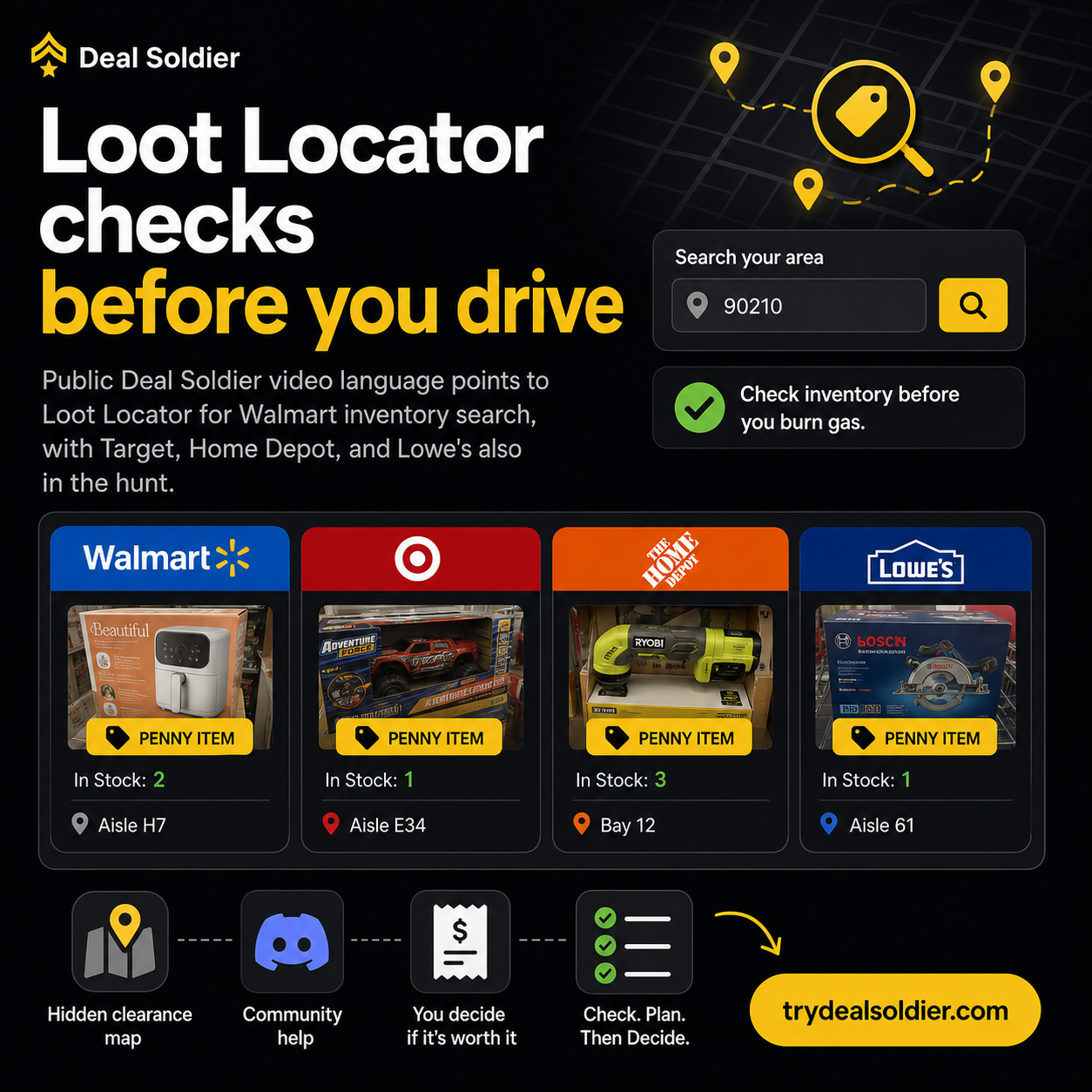
The biggest mistake beginners make is putting immense pressure on their first store visit. They walk into Walmart expecting to find a cart full of $25 laptops and 3-cent power tools, only to leave empty-handed and demoralized.
Your first store visit should be treated as a low-stakes scientific experiment. Choose a familiar store during a routine grocery errand. Do not make a special high-stress trip. Pick a simple department: Household Cleaning, Paper Goods, or Kitchenware.
Walk down the aisle, locate an item where the packaging looks slightly older or where a shelf tag is missing, and scan it with your phone in Store Mode. When that scanner screen reveals a price 50% lower than the printed packaging, you have broken through the psychological barrier. You are now officially a clearance hunter.
| First Mission Step | Objective | Pass Criteria |
|---|---|---|
| 1. Store Selection | Choose your most familiar local Walmart or Target | Store visited during normal errand routine |
| 2. Department Focus | Navigate to Household Cleaners or Paper Goods | Focus on consumable necessities, not electronics |
| 3. Physical Scan | Scan 10 unmarked or older-box items | Observe digital scanner price vs shelf tag |
| 4. Purchase / Validation | Buy 1 verified markdown item at self-checkout | Register receipt confirms clearance savings |
📋 Actionable Verification Protocol
- Keep your first mission under 20 minutes to prevent fatigue.
- Target consumable household goods that your family will definitely use.
- Keep your receipt as a trophy confirming your first verified win.
Target Decision: Execute a low-stakes, 20-minute first store test during a routine errand run.
Action Threshold: Finding a single item with a 40%+ price mismatch achieves full mission success.
Immediate Failure Mode: Chasing rare high-ticket electronics on your first day and getting frustrated.
For additional context on First Store Test, compare this operational step with our detailed breakdown in Deal Soldier Review: Is It Worth $44/Month? and cross-reference our field rules in Walmart Hidden Clearance Guide.
First Alert Test
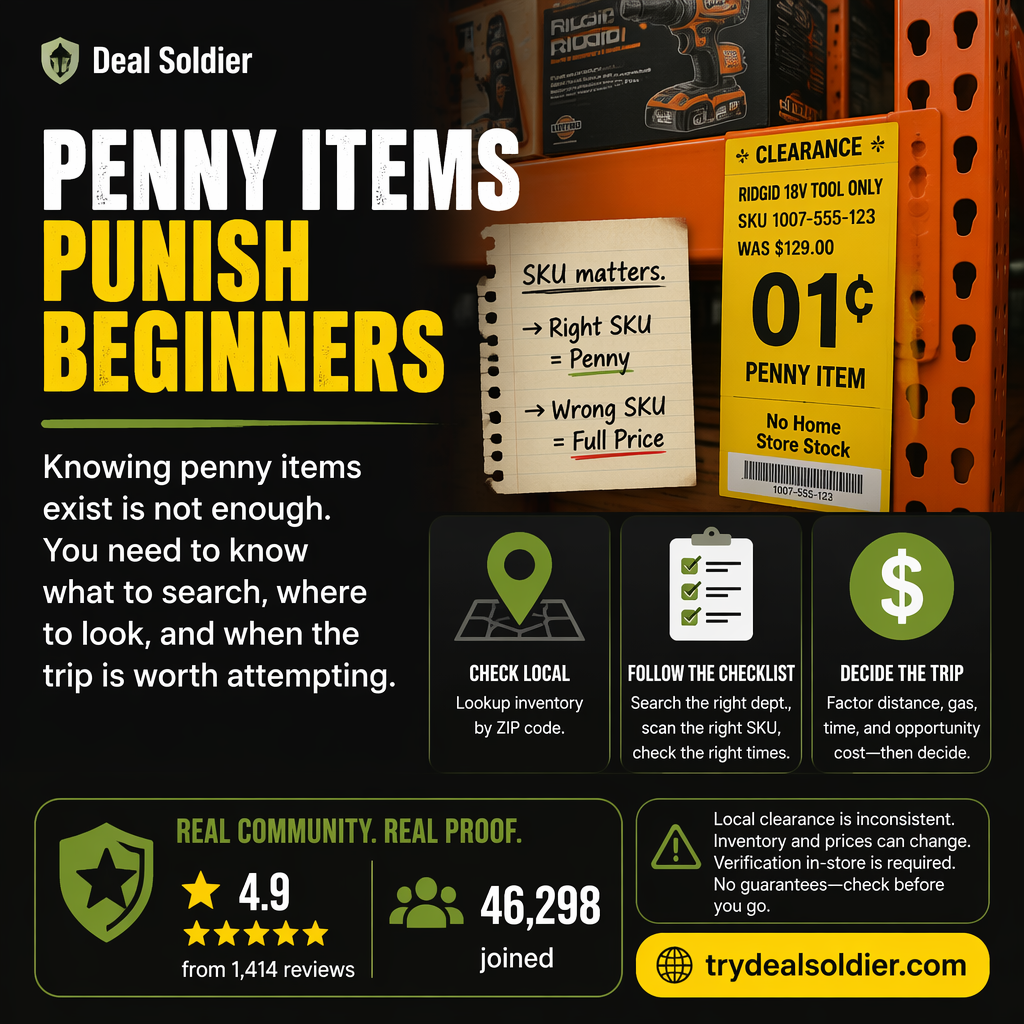
Once you have completed your initial in-store scanning test, your next milestone is executing your first response to an automated Deal Soldier alert.
Do not react to the first 20 alerts you see. Wait patiently until an alert fires that satisfies three strict criteria: First, it must be for a store within your immediate neighborhood (under 15 minutes away). Second, it must be fresh (posted within the last 45 minutes). Third, it must be an item your household can actually use.
When that ideal alert appears, execute your response: open Turbo Search, confirm that the system shows 3+ units in stock at that location, drive to the store, locate the item, scan the barcode, and purchase it. Successfully executing your first alert builds permanent operational confidence.
| Alert Criteria | Required Condition | Why It Matters |
|---|---|---|
| Freshness Window | Posted less than 45 minutes ago | Ensures inventory has not been swept by other hunters |
| Proximity Filter | Store located within 5 miles of current location | Minimizes travel time and fuel expenditure |
| Inventory Buffer | Turbo Search displays 3+ units in stock | Protects against phantom inventory and shrinkage |
| Utility Check | Household consumable, staple tool, or verified gift | Guarantees that the purchase produces real economic value |
📋 Actionable Verification Protocol
- Wait for an alert that meets all four criteria above.
- Check Turbo Search to verify 3+ units in stock before leaving.
- Drive calmly to the store, retrieve the item, and verify the barcode.
Target Decision: Wait for the perfect local alert to execute your first alert test run.
Action Threshold: Execute only when Freshness (< 45m), Proximity (< 5mi), and Stock (3+) align.
Immediate Failure Mode: Reacting impulsively to a distant alert and driving 25 miles into an empty shelf.
For additional context on First Alert Test, compare this operational step with our detailed breakdown in What Is Hidden Clearance? and cross-reference our field rules in Deal Soldier 7-Day Trial Checklist.
What Not To Buy
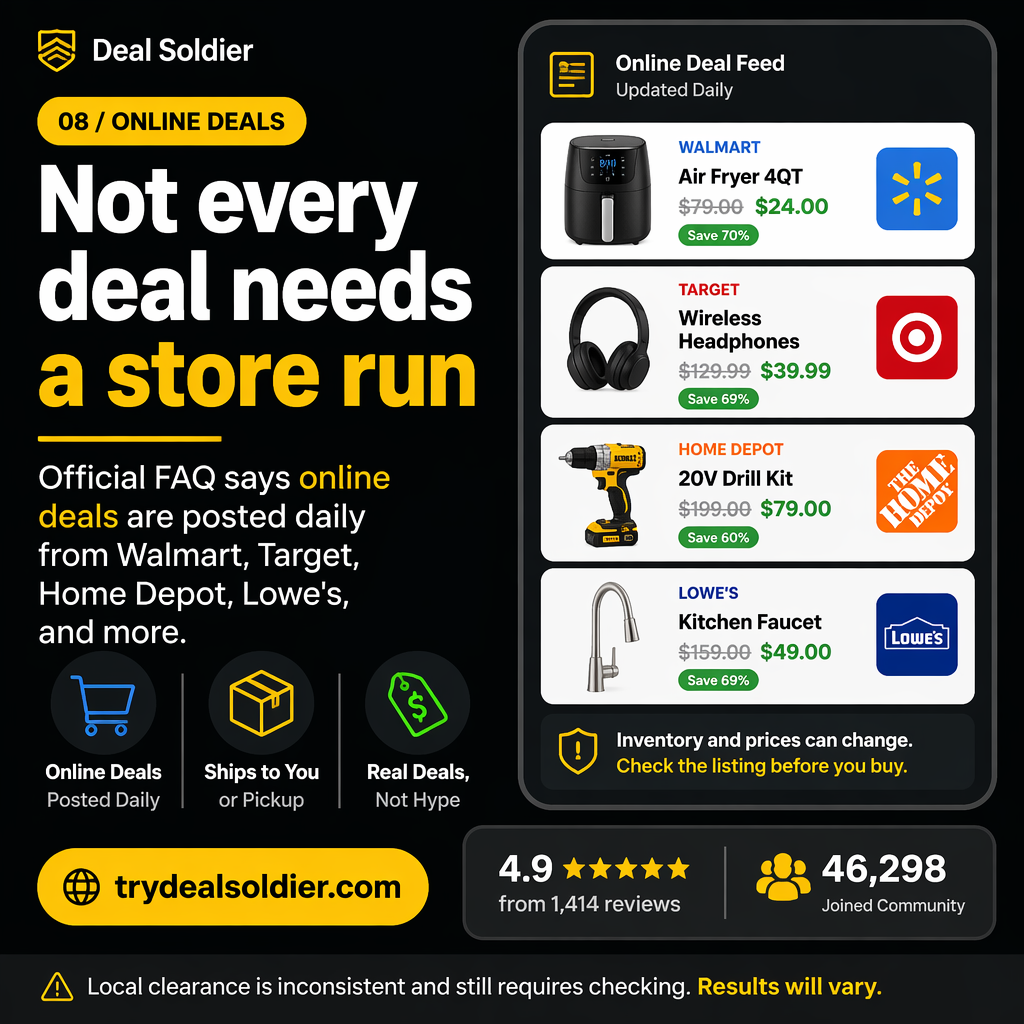
The single greatest financial hazard for beginners is 'Clearance Hoarding'. When you realize that items can be purchased for 80% or 90% off, an intoxicating psychological trap snaps shut. You begin buying items simply because they are cheap.
You buy a neon green phone case for an iPhone 8. You buy three novelty Halloween baking pans in March. You buy obscure branded apparel in size XXXL. You tell yourself: 'I'll use it someday' or 'I'll sell it online'.
Six months later, your garage is cluttered with useless boxes, and your checking account is $300 lighter. Elite deal hunters enforce strict discipline: If an item does not have immediate, verified household utility, or if it does not meet strict resale sell-through criteria, leave it on the shelf. Preserving your cash is just as important as finding discounts.
| Junk Trap | Why Retailers Discount It | Beginner Rule |
|---|---|---|
| Obsolete Phone / Tech Cases | Fits devices no longer in production | NEVER BUY: Zero demand; impossible to sell |
| Off-Flavor Seasonal Groceries | Unappealing flavors (e.g., Pumpkin Spice Chips) | AVOID: Nobody in your house will eat it |
| Low-End No-Name Electronics | High defect rate; terrible sound/build quality | AVOID: Breaks in 2 weeks; high return headache |
| Odd-Size Clothing (XXXL / XXS) | Overstocked extreme sizing | ONLY BUY if an exact family member wears that size |
📋 Actionable Verification Protocol
- Ask yourself: 'Would I buy this item if it was only 20% off?'
- If the answer is no, you are buying the discount, not the product.
- Leave low-utility items on the shelf and preserve your cash for high-margin wins.
Target Decision: Establish a strict 'Zero Junk' policy to protect your home from clearance clutter.
Action Threshold: Reject any item that does not solve an immediate, pre-existing household need.
Immediate Failure Mode: Spending $150 on cheap clearance clutter and convincing yourself you 'saved money'.
For additional context on What Not To Buy, compare this operational step with our detailed breakdown in Walmart Hidden Clearance Guide and cross-reference our field rules in Deal Soldier Review: Is It Worth $44/Month?.
Support Questions
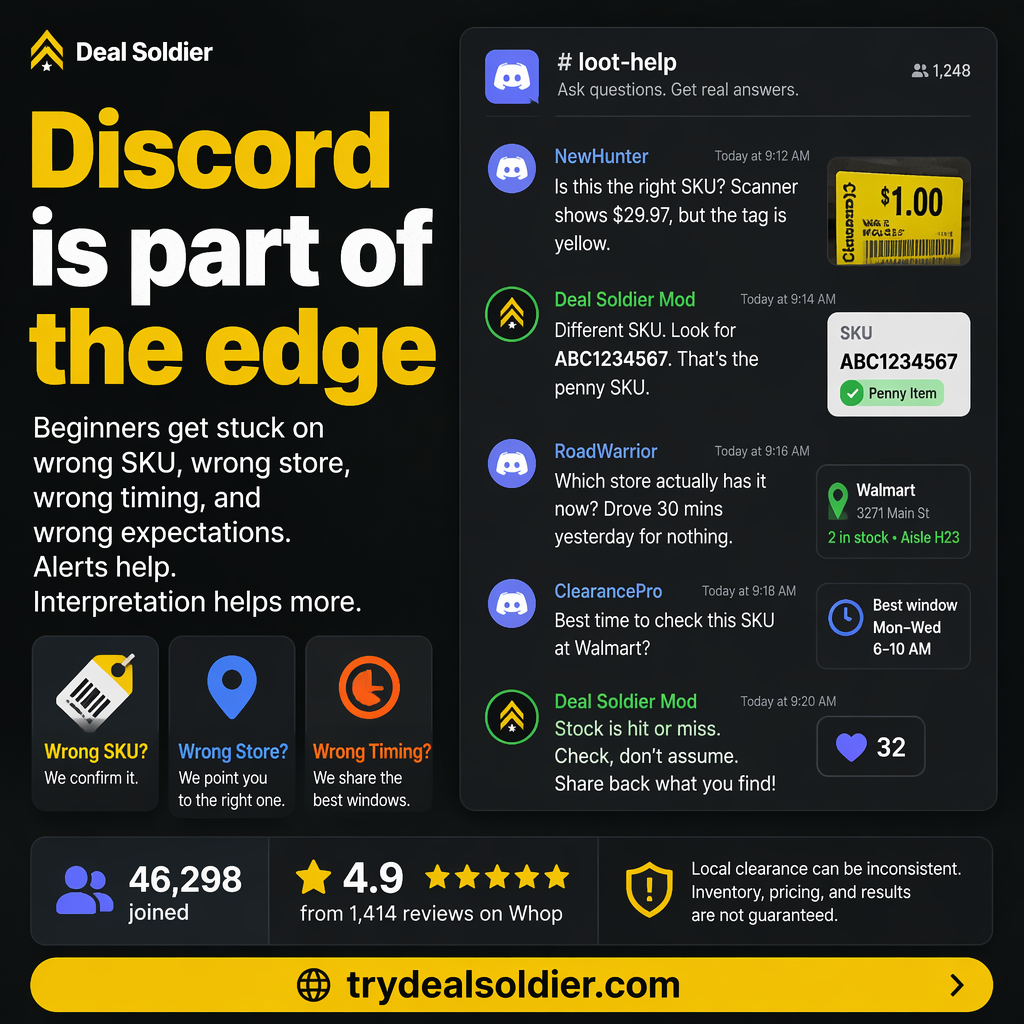
One of the primary benefits of paying for an established platform like Deal Soldier is having access to an active support infrastructure. When you are standing in a store uncertain of how to handle an operational issue, you are not alone.
Common questions that beginners should ask include: 'How do I force the Walmart app to show in-store price instead of online price?' 'What should I do if a cashier refuses to sell a clearance item?' 'How do I tell if a packaging box has been resealed?'
Asking questions before you make an expensive mistake is the smartest move a beginner can make. The Discord community is populated by veterans who have encountered every retail scenario imaginable and are eager to share solutions.
| Common Beginner Question | Community Answer / Solution | Channel to Use |
|---|---|---|
| App shows online price in-store | Toggle location services; connect to store Wi-Fi; use in-store kiosk | #app-troubleshooting |
| Cashier voided my penny item | Accept politely; never argue; try self-checkout next time | #beginner-help |
| How to check Amazon gating? | Download Amazon Seller app; scan barcode; check lock icon | #resale-help |
| How to set up Discord notifications? | Follow pinned video in welcome channel; customize channel alerts | #welcome-onboarding |
📋 Actionable Verification Protocol
- Introduce yourself in the welcome channel on Day 1.
- Search channel history before posting: 90% of beginner questions have existing answers.
- Post a screenshot whenever asking a technical question to get faster answers.
Target Decision: Leverage community support actively whenever you encounter operational friction.
Action Threshold: Get your questions answered within minutes by active community moderators.
Immediate Failure Mode: Allowing minor technical hurdles to stall your progress during the 7-day trial.
For additional context on Support Questions, compare this operational step with our detailed breakdown in Deal Soldier 7-Day Trial Checklist and cross-reference our field rules in What Is Hidden Clearance?.
7-Day Beginner Plan
To guarantee that beginners extract maximum value from their 7-day trial, we created the 7-Day Beginner Action Plan. This curriculum breaks down the learning process into manageable daily milestones.
Days 1 and 2 focus on digital setup and vocabulary: configuring Discord, linking Whop, entering ZIP codes into Turbo Search, and memorizing the core acronyms. Days 3 and 4 focus on physical calibration: executing your first in-store scanning run during routine grocery shopping.
Days 5 and 6 focus on alert execution: monitoring morning pings and testing a verified local lead. On Day 7, you audit your scorecard, calculate your net savings, and make your objective renewal decision. It is structured, manageable, and highly effective.
| Day | Focus Area | Action Milestone |
|---|---|---|
| Day 1 | Account & App Setup | Authenticate Whop key; configure Discord notifications on phone |
| Day 2 | Tool Familiarization | Run 1 Turbo Search test; memorize 7 core deal-hunting terms |
| Day 3 | First In-Store Scan | Visit local store during grocery run; scan 10 unmarked items |
| Day 4 | Pipeline Audit | Locate 2 yellow-tag clearance items (.03 or deep markdown) |
| Day 5 | Live Alert Test | Track 1 morning SniperX alert; check physical shelf availability |
| Day 6 | Scorecard Calculation | Sum gross savings, subtract fuel, compare against $44 fee |
| Day 7 | Objective Decision | Renew if net value >= $44; otherwise execute 1-click cancel |
📋 Actionable Verification Protocol
- Follow the 7-day plan day by day without skipping steps.
- Log all progress in your personal trial notes.
- Reach out for help in Discord if you get stuck on any daily milestone.
Target Decision: Follow the 7-day beginner curriculum to achieve complete operational competence.
Action Threshold: Complete all 7 daily action items before your trial billing renewal.
Immediate Failure Mode: Procrastinating and letting the trial expire without testing the tools.
For additional context on 7-Day Beginner Plan, compare this operational step with our detailed breakdown in Deal Soldier Review: Is It Worth $44/Month? and cross-reference our field rules in Walmart Hidden Clearance Guide.
FAQ
Beginners often harbor lingering doubts before stepping into a store: Do I need special equipment? Will store security follow me if I scan lots of items? What if I look weird scanning shelves?
First, regarding equipment: your everyday smartphone camera is more than sufficient. You do not need commercial barcode scanners, external battery packs, or specialized carts.
Second, regarding social anxiety: scanning items in retail stores is completely normal in 2026. Millions of everyday shoppers use the Walmart and Target apps to check prices, scan gift registries, and calculate budgets every day. Store employees and security do not care if you scan barcodes. Walk with confidence, smile, and treat clearance hunting like normal shopping.
| Novice Concern | Retail Reality | Confidence Mindset |
|---|---|---|
| Do I need special equipment? | No; standard smartphone camera is 100% sufficient | Zero extra gear required to start |
| Will security harass me? | No; price scanning is standard customer app behavior | Shop calmly; you are an authorized paying customer |
| Do I have to buy in bulk? | No; buying single household units is completely valid | Focus on saving money for your personal family budget |
📋 Actionable Verification Protocol
- Keep your smartphone charged before visiting stores.
- Act like a normal, respectful shopper at all times.
- Celebrate your first savings win with pride.
Target Decision: Step into your local retail stores with complete confidence and zero hesitation.
Action Threshold: Recognize that price scanning is a standard, authorized consumer practice.
Immediate Failure Mode: Allowing unnecessary social anxiety to keep you from claiming valuable clearance savings.
For additional context on FAQ, compare this operational step with our detailed breakdown in What Is Hidden Clearance? and cross-reference our field rules in Deal Soldier 7-Day Trial Checklist.